Proudly serving Phoenix, Glendale, Scottsdale, Tempe, Mesa, Chandler & surrounding areasCall or Text 24/7: 480-259-3923
Aerial view of residential neighborhoods with desert landscaping and Saguaro cacti in Phoenix, AZ at golden hour.

Trenchless Sewer Repair in Phoenix, AZ for Structural Pipe Damage

Phoenix Sewers provides trenchless sewer repair throughout Phoenix for cracked, root-invaded, offset, or collapsed lines. Our crews use CIPP lining, pipe bursting, sewer camera inspection, drain cleaning, and hydro jetting to solve problems through small access points. We work with the clay, Orangeburg, and cast iron lines found in older Phoenix housing stock. Every recommendation starts with the defect type, pipe material, diameter, and length shown on camera.

Expansive clay and caliche soil can move as monsoon moisture and extreme heat cycles change conditions across the Salt River Valley. That movement can crack rigid joints, offset aging pipe, and let roots from mature ash, mesquite, and olive trees enter vulnerable lines. Our technicians are licensed through the Arizona Registrar of Contractors and follow NASSCO inspection and rehabilitation standards on camera scopes and lining work. This local pipe and soil experience helps us select the least invasive repair that addresses the documented failure.

You receive the inspection video and a written scope before we recommend spot repair, full lining, pipe bursting, or a limited dig-and-replace section. A written estimate explains the scope and cost before work begins.

Phoenix Sewers provides trenchless sewer repair across Phoenix and the surrounding metro, including Tempe, Scottsdale, Mesa, Glendale, and Chandler.

★ ★ ★ ★ ★4.9/5 Average Rating · 20+ Years of Experience · Thousands of Customers Helped · Licensed & Insured · Residential & Commercial

Trenchless Sewer Repair Methods & Benefits

What Is Trenchless Sewer Repair?

Trenchless repair uses one or two access pits, usually 2 to 3 feet square, instead of opening a trench along the entire sewer run. Through those points, a crew can pull a resin-saturated liner into the host pipe or fracture the failed pipe with a bursting head while drawing new pipe behind it.

Compared with open-trench replacement, these methods can avoid removing mature desert landscaping, stamped concrete driveways, and block-wall sections along property lines. They can also reduce disruption around irrigation lines and pool equipment that cross an excavation path.

Many Phoenix sewer lines installed from the 1950s through the 1980s used clay tile or Orangeburg pipe. With a realistic service life of 30 to 50 years, those materials are now failing in older subdivisions, and trenchless rehabilitation can restore structural integrity without the extended excavation once associated with sewer replacement.

Benefits of Trenchless Sewer Repair

The right trenchless method can restore or replace a damaged sewer while limiting surface demolition and tailoring the repair to the failure documented on camera.

  • Avoids a full-length trench across the property
  • Helps preserve driveways, patios, landscaping, and block walls
  • Uses camera findings to match the method to the defect
  • Creates a jointless CIPP interior resistant to root entry at old joints
  • Can install fused-joint HDPE where the old pipe must be replaced
  • Completes most residential lining work in a single day
  • Reduces restoration costs tied to concrete and landscaping removal
  • Provides video evidence and a written repair scope before work
Trenchless Solutions

Phoenix Trenchless Sewer Services

From diagnosis and cleaning to structural rehabilitation and replacement, each service addresses a distinct pipe condition revealed during inspection.

Sewer Camera Inspection

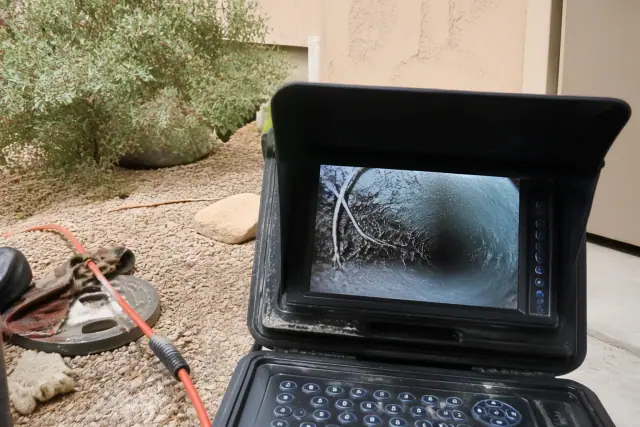
Sewer camera inspection monitor showing tree roots in a pipe at a job site in Phoenix, AZ.

A waterproof, high-resolution camera records the line through a cleanout or accessible fixture. Its sonde transmitter locates the depth and surface position of roots, cracks, bellies, offsets, collapses, grease, or scale down to the foot.

Request Estimate

CIPP Sewer Pipe Lining

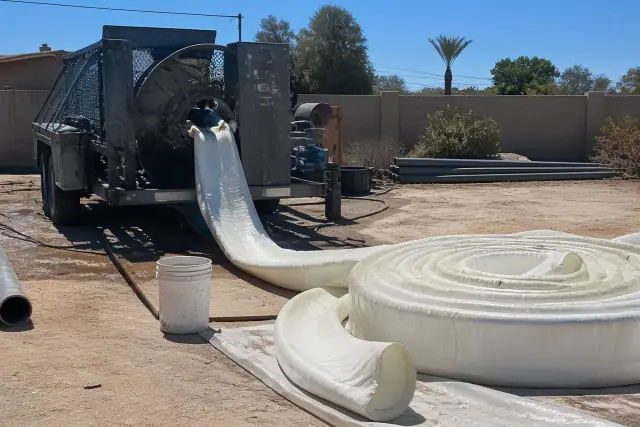
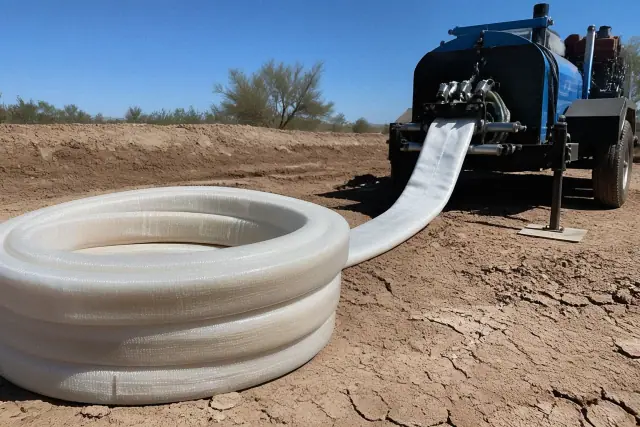
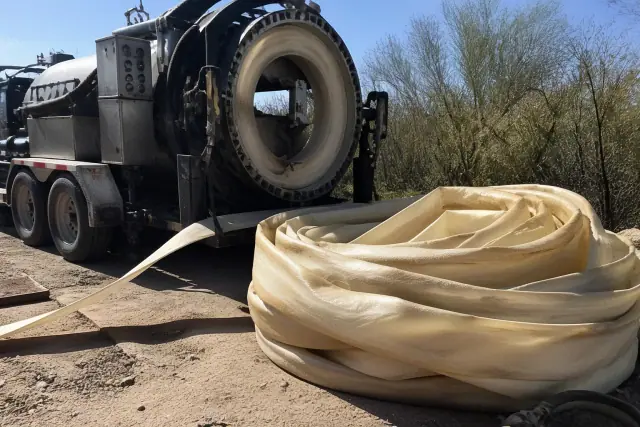
Resin-coated liner and hydraulic inversion machine for CIPP sewer pipe lining at a construction site in Phoenix, AZ.

Cured-in-place pipe lining presses an epoxy-saturated felt tube against the host pipe and cures it with heat or UV light. The result is a jointless structural pipe within the existing pipe, suited to lines that still provide a sound host shape.

Request Estimate

Sewer Pipe Bursting

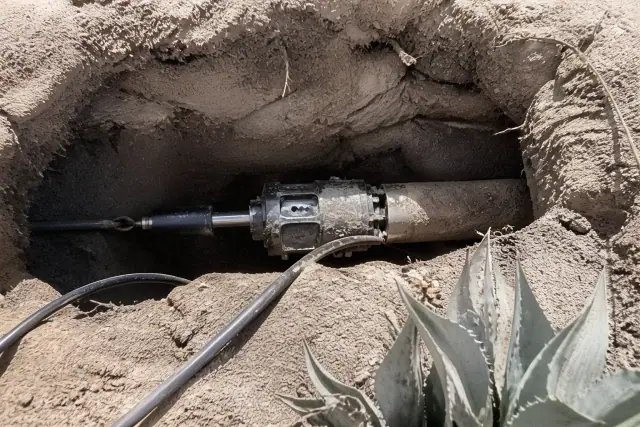
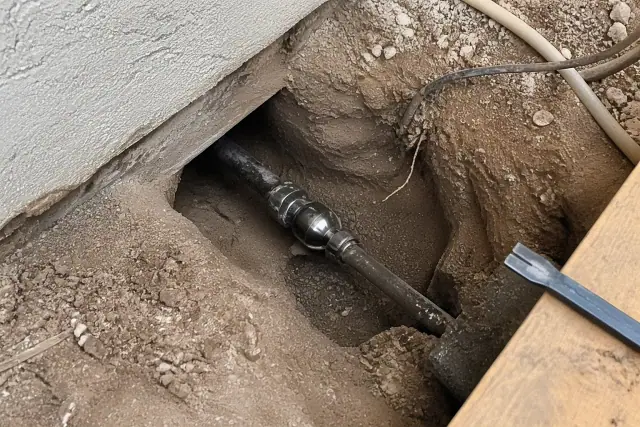
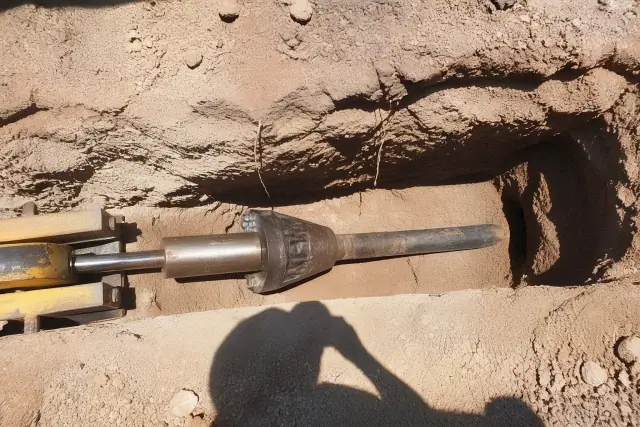
Hydraulic bursting head inside a trenchless sewer repair pit surrounded by desert soil in Phoenix, AZ.

Pipe bursting fractures a severely compromised line outward while pulling a new HDPE pipe into place. It is an option for collapsed or undersized pipe and for host lines that cannot support a liner.

Request Estimate

Hydro Jetting and Main Line Cleaning

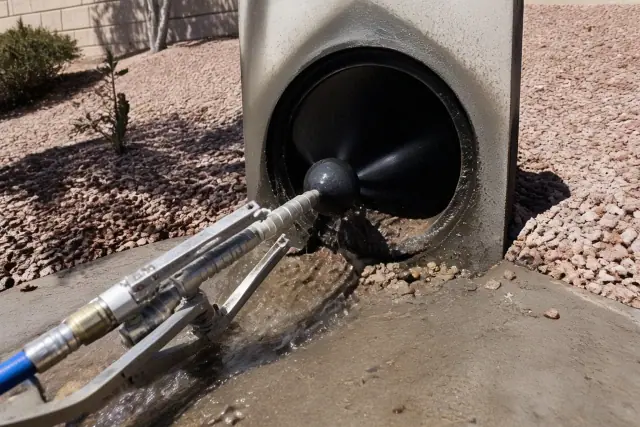
High pressure hydro jetting hose cleaning a main sewer line at a trenchless repair site in Phoenix, AZ.

Hydro jetting sends specialized nozzles through the full line at pressures typically between 1,500 and 4,000 PSI. It scours grease, scale, sand, and root mass from the pipe wall, followed by a camera pass to confirm cleaning and reveal structural damage.

Request Estimate

Camera-Guided Spot Repair

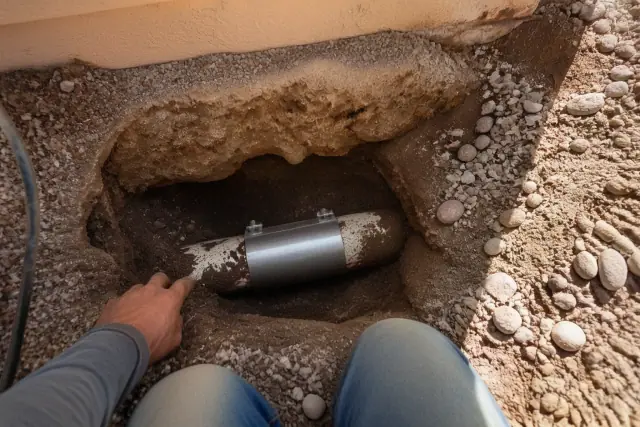
Technician performing a sewer pipe spot repair in a gravel trench at a Phoenix, AZ jobsite.

An isolated crack or joint separation caught early may qualify for spot lining instead of full replacement. Manageable defects that have supported roughly $1,500 spot repairs can develop into $15,000-plus replacements after the pipe separates or collapses, making early inspection important.

Request Estimate

Commercial Sewer Services

Hydraulic bursting head in a trenchless sewer repair pit at a job site in Phoenix, AZ.

Trenchless lining and bursting can rehabilitate the larger, higher-flow mains serving restaurants, apartment complexes, and industrial properties. Work is scheduled around business hours where possible to limit disruption to parking lots and loading docks.

Request Estimate
Repair Options

Types of Sewer Repair Approaches

Pipe condition, material, diameter, depth, access, and defect length determine whether lining, bursting, focused replacement, or a property-specific trenchless plan is appropriate.

Resin-coated sewer liner coiled next to a hydraulic inversion machine at a trenchless repair site in Phoenix, AZ.

Full CIPP Lining

Full CIPP lining rehabilitates a structurally suitable host line from access point to access point with a continuous interior liner rated for decades of service.

  • Camera inspection defines the defect length and pipe diameter
  • Hydro jetting removes roots and debris before installation
  • The epoxy-saturated liner is measured and prepared on site
  • Heat or UV light cures the liner against the host pipe
  • Typical cure time runs two to six hours
Request Estimate
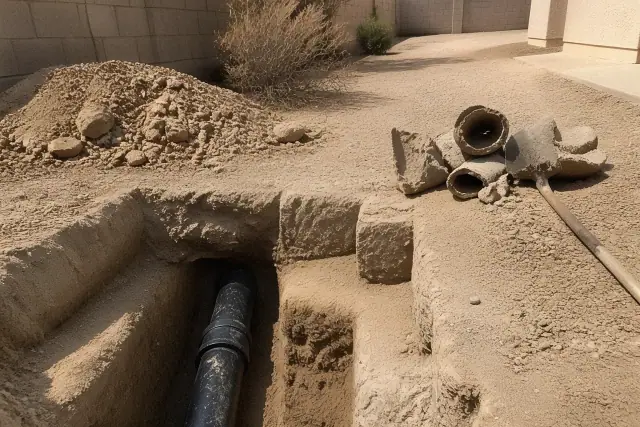
New HDPE pipe installed in a residential sewer trench in Phoenix, AZ with fractured pipe pieces in the soil.

Full-Line Pipe Bursting

Pipe bursting provides a complete new pipe run through small pits when the existing line is too damaged, collapsed, or undersized for lining.

  • A bursting head fractures the failed pipe outward
  • New HDPE pipe follows the head through the same path
  • Fused joints leave no seams for roots to penetrate
  • A 4-inch clay main can be upsized to a 6-inch HDPE line
  • Manufacturer life expectancy in Arizona runs 30 to 50 years
Request Estimate
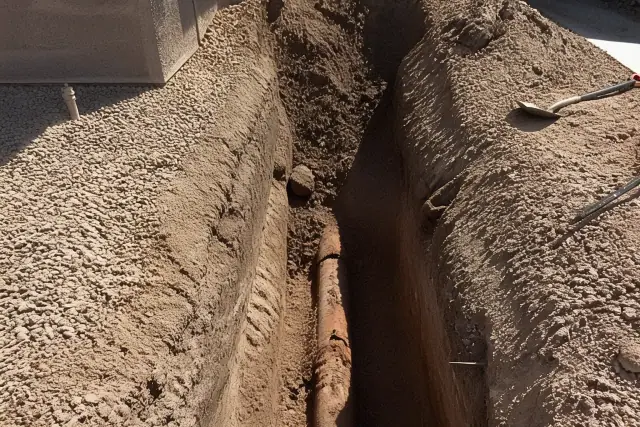
Deep trench with exposed cracked terra cotta sewer pipe and soil during a repair project in Phoenix, AZ.

Limited Dig-and-Replace

Some defects still call for a focused traditional excavation, especially when camera findings show a section that lining or bursting cannot address safely.

  • Targets the confirmed defect rather than the entire yard
  • Can address an isolated collapse or inaccessible connection
  • Uses camera location data to define the excavation point
  • Accounts for irrigation, pool equipment, and utilities in the path
  • May require surface and landscaping restoration
Request Estimate
A hydraulic bursting head positioned in an entry pit for trenchless sewer repair at a jobsite in Phoenix, AZ.

Residential Trenchless Repair

Residential plans account for older Phoenix materials, mature-tree roots, current fixture demand, access through cleanouts, and hardscape above the sewer route.

  • Fits post-war ranch and mid-century housing conditions
  • Evaluates recurring backups across multiple fixtures
  • Checks shallow clay joints near mature trees
  • Protects yards, patios, and driveways where access allows
  • Sizes repairs to the documented diameter and defect
Request Estimate
Resin-coated sewer liner coiled next to a hydraulic inversion machine at a trenchless repair site in Phoenix, AZ.

Commercial Trenchless Rehabilitation

Commercial sewer plans scale lining, bursting, and cleaning to higher flow, larger pipe, operating schedules, and documentation requirements.

  • Common commercial pipe diameters range from 6 to 12 inches
  • Addresses faster grease and scale accumulation
  • Most lining and bursting projects take one to three days
  • Open excavation can require a two-to-three-week timeline
  • Permits and inspections document completed work
Request Estimate
Finding Your Right Fit

Choosing the Right Trenchless Repair Approach

The best repair is the one supported by the camera footage, pipe condition, and access-not a one-method recommendation made before inspection.

Camera-Verified Recommendations

Continuous video and sonde location data identify the material, depth, diameter, defect type, and affected length. Those findings guide whether spot lining, CIPP, bursting, or focused excavation is the least invasive effective repair.

Phoenix Pipe Experience

Our technicians are trained on expansive soil behavior and the aging clay-pipe conditions common in Arcadia, Encanto, North Central Phoenix, Sunnyslope, and Melrose. That context matters when interpreting joint offsets, root intrusion, and cracks caused by ground movement.

Documented, Standards-Based Work

Camera scopes and lining work follow NASSCO inspection and rehabilitation standards, while required commercial permits are coordinated through the City of Phoenix. Customers receive footage and a written scope so the recommendation is tied to visible conditions.

What Sets Us Apart

Why Choose Us for Trenchless Sewer Repair?

Phoenix Sewers combines camera-based diagnosis, local material knowledge, licensed technicians, documented scopes, and repair methods selected for the actual failure. We explain the footage and written estimate before work starts so you can compare the recommended path with the condition of your line.

Request Camera Inspection

Root Intrusion at Pipe Joints

Roots from mature ash, mesquite, and olive trees can seek moisture through cracks and joints in shallow clay lines. The growing root mass traps paper and solids, causing slow drains and backups that return after basic clearing.

Recurring Multi-Fixture Backups

Gurgling drains, water backing into a tub or shower when the washing machine runs, and multiple slow fixtures usually point toward a main-line problem rather than one isolated clog. A persistent sewer smell in the yard is another reason to inspect the line.

Bellied or Offset Pipe Sections

A bellied pipe holds standing water, while an offset or separated joint catches solids and restricts flow. Camera footage shows where the alignment changes and whether one section or multiple points require repair.

Cracked or Collapsed Sewer Pipe

Hairline cracks and isolated joint failures may support spot lining when found early. A collapsed line or a pipe with no sound host structure may instead require pipe bursting or a focused excavation.

Grease, Scale, and Sand Buildup

Deposits narrow the pipe interior and reduce flow, particularly in higher-use commercial lines. Hydro jetting cleans the full interior surface more thoroughly than a mechanical snake that only punches an opening through the obstruction.

Soil Movement Around Aging Lines

Seasonal moisture changes and intense heat cycles can shift expansive Phoenix soil around rigid old pipe. Over time, that stress contributes to cracks, misaligned joints, and separations in aging clay and Orangeburg lines.

How it works

Our Trenchless Sewer Repair Process

A documented sequence-from inspection and cleaning through installation and final verification-keeps the repair tied to the condition of the line.

01.

Inspect the Sewer Line

We feed a waterproof camera through a cleanout or accessible fixture and record the complete run. The footage identifies roots, buildup, cracks, bellies, offsets, collapses, and the existing pipe material.

02.

Locate and Measure the Defect

The camera's sonde transmitter marks the defect's exact depth and surface position. We record pipe diameter, affected length, access conditions, and whether the host line can support lining.

03.

Review the Footage and Scope

You receive the video and a written scope explaining the recommended repair path. A written estimate sets out the full scope and cost before work begins.

04.

Clear and Prepare the Host Pipe

For lining work, hydro jetting clears roots and debris from the host pipe so the liner can seat against the interior wall. A camera pass confirms the line is ready and exposes any additional structural damage.

05.

Install the Selected Repair

We pull the measured CIPP liner into place and cure it, or draw new HDPE behind a bursting head when replacement is required. A standard residential bursting run usually takes four to eight hours including setup and pull-through.

06.

Verify the Finished Line

After curing or pull-through, we confirm the repaired run and document the completed condition. Longer runs, larger commercial diameters, or multiple access pits can extend work to two or three days.

Get Clear Answers

Schedule a Sewer Camera
Inspection

If slow drains, odors, gurgling, or backups keep returning, start with video evidence before approving a dig. Request an inspection to locate the problem and receive a written repair scope and estimate.

Sewer Repair Help

Trenchless Sewer Repair FAQs

These answers cover timing, cost, inspection, repair methods, cleaning, commercial work, and service coverage for Phoenix sewer lines.

Call Our Experts

Most residential trenchless jobs are completed in a single day. CIPP cure time typically runs two to six hours, while a standard residential pipe-bursting run usually takes four to eight hours including setup and pull-through. Longer runs, large commercial lines, or multiple access pits can take two or three days.

Trenchless repair generally runs $75 to $310 per linear foot, with most residential projects totaling $4,000 to $15,000. Spot repairs for isolated damage can run about $1,500 to $5,000, while longer traditional excavation and replacement can reach $15,000 to $25,000 after concrete and landscaping restoration. We provide a written quote based on camera findings before work begins.

Replacement may make more sense when a line is collapsed, severely bellied in several places, structurally unable to support a liner, or undersized for current demand. Deteriorating clay tile or Orangeburg near the end of its 30-to-50-year service life may also have too many failure points for repeated spot repairs. The camera footage determines whether lining, bursting, or focused excavation fits the condition.

Common causes include roots entering aging clay-pipe joints, grease or scale narrowing the interior, and structural failures such as offsets or bellies that trap solids. Expansive clay soil can also shift and misalign older lines over time. A camera inspection identifies the specific cause instead of only clearing the symptom.

Trenchless work can avoid a full trench, extensive landscaping removal, and concrete cutting by using one or two small access pits. Many residential jobs finish in a day, while open-trench replacement can take one to three weeks. The better method still depends on the actual defect and access shown during inspection.

Recurring slow drains, gurgling at several fixtures, and backups that become more frequent can indicate root intrusion. Camera footage shows roots entering joints or cracks and forming mats that catch paper and solids. Hydro jetting can remove existing root mass, while lining or bursting addresses the entry points for a longer-term repair.

We prioritize active backup calls to schedule camera inspection and temporary relief, such as jetting, as quickly as our route allows. Once flow is restored, we evaluate whether a permanent trenchless repair or replacement is needed. Response time depends on current job load and location within the metro area.

A waterproof, high-resolution camera travels through a cleanout or accessible fixture while recording the line. A sonde transmitter identifies the surface position and depth of a defect, and the footage shows roots, bellies, offsets, cracks, collapses, grease, and scale. You receive the video and a written scope before a repair is recommended.

After inspection and hydro jetting, a felt tube saturated with epoxy resin is measured and pulled into the damaged pipe. Inflation presses it against the host wall, and heat or UV light cures it into a jointless structural pipe within the old line. CIPP requires enough sound host structure to support the liner shape.

Pipe bursting is suited to a severely collapsed line, a pipe too compromised to hold a liner, or a main that must be upsized for current fixture demand. The bursting head fractures the old pipe and pulls fused-joint HDPE into place behind it. It replaces the full run without opening the original trench line.

Properties with mature trees close to the sewer may benefit from preventive jetting every 12 to 24 months to stay ahead of root regrowth. The right interval depends on what the follow-up camera shows. Jetting clears root mass and deposits, but a structural opening may still require lining or bursting.

Yes. Lining and bursting can scale to the 6- to 12-inch mains commonly serving restaurants, apartment complexes, and industrial properties. The work can be scheduled around business hours where possible, and required permits and inspections are coordinated for documented completion.

Phoenix Sewers serves Phoenix and the surrounding metro, including Tempe, Scottsdale, Mesa, Glendale, and Chandler. The team also works in older Phoenix neighborhoods such as Arcadia, Encanto, North Central Phoenix, Sunnyslope, and Melrose, where aging clay lines and mature-tree roots are common concerns.