Sewer Line Repair
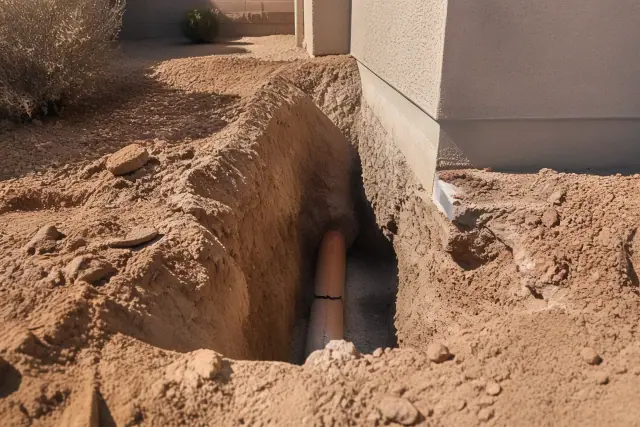
A camera inspection isolates cracks, separated joints, or a crushed section before excavation begins. When the remaining line is sound, a targeted spot repair can limit cost and landscape disturbance.
Explore Service
Phoenix Sewers provides sewer line repair and sewer line replacement in Peoria, AZ, along with drain cleaning and sewer camera inspection. Our residential and commercial services also include hydro jetting, main sewer line cleaning, trenchless repair, pipe lining, and pipe bursting. We work across Peoria's Maricopa County core and its smaller northern Yavapai County portion. Every recommendation begins with a camera-based diagnosis of the actual pipe condition.
Caliche hardpan and expansive clay move through Peoria's monsoon-to-drought cycle, stressing buried joints and slopes. Older neighborhoods may have clay or cast-iron laterals, while newer master-planned areas use PVC that can still shift in fill soil. Peoria grew from 154,065 residents in 2010 to 190,985 by the 2020 census, creating a broad mix of construction eras and pipe conditions. Our licensed sewer repair contractors inspect the line, explain the footage, and quote the method that fits the damage before work begins.
Same-day repair is available for active backups, and 24/7 emergency service covers sewage surfacing in the yard, burst laterals, and complete line failures.
Use the services below to match symptoms and camera findings to a practical next step, from clearing a restriction to replacing a failed lateral. For a property in Avondale, AZ , use that location page for repair, cleaning, and inspection options.
A camera inspection isolates cracks, separated joints, or a crushed section before excavation begins. When the remaining line is sound, a targeted spot repair can limit cost and landscape disturbance.
Explore Service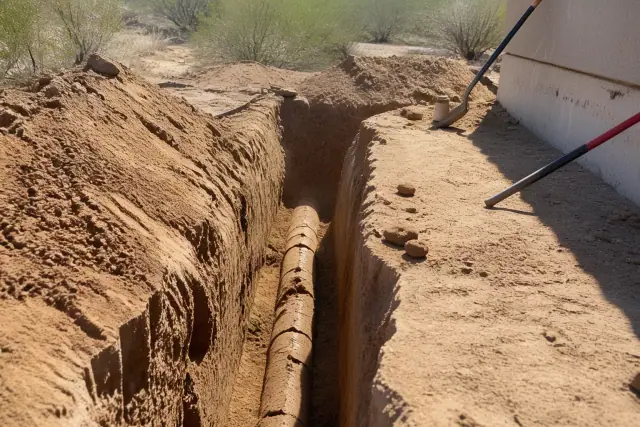
Multiple failure points, heavy root intrusion, or bellied sections can make replacement more practical than repeated repairs. We install Schedule 40 PVC and plan depth, length, concrete access, and code requirements before work begins.
Explore Service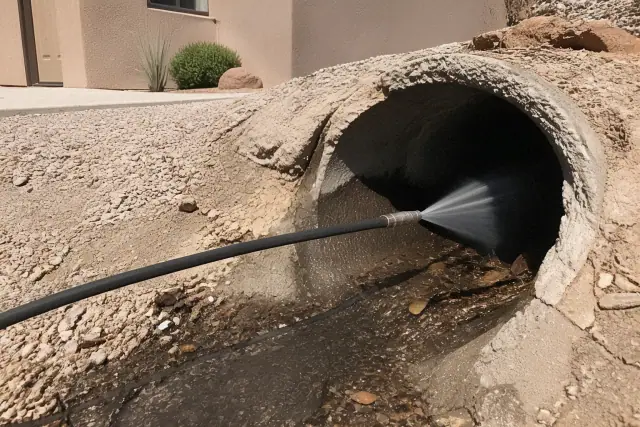
Mechanical snaking clears kitchen, bathroom, laundry, and branch-line clogs caused by grease, mineral buildup, or roots. Equipment is sized to the pipe so a localized restriction is not mistaken for a main-line failure.
Explore Service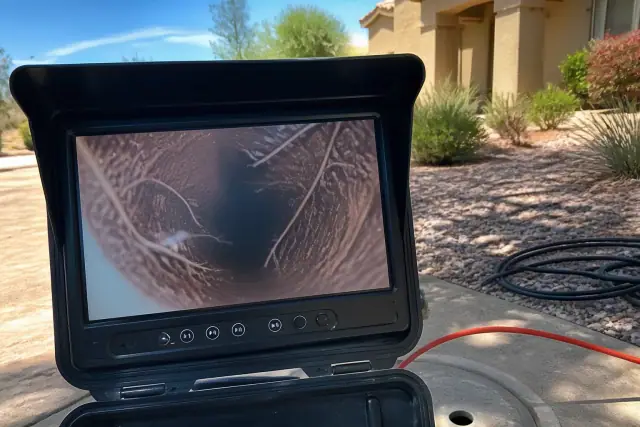
A push camera locates cracks, offset joints, bellies, root intrusion, and collapsed sections while recording footage for review. We document pipe material, depth, and condition using PACP coding conventions.
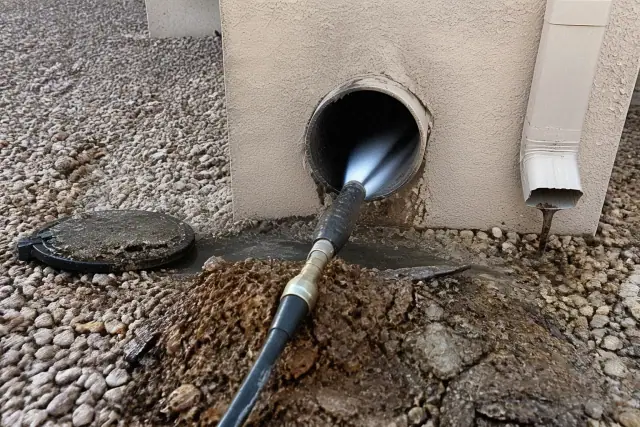
Hydro jetting uses water in the 3,000 to 4,000 PSI range to scour the pipe's full interior instead of opening only a narrow path. It removes grease, hard-water mineral scale, and fine root hair left behind by ordinary snaking.
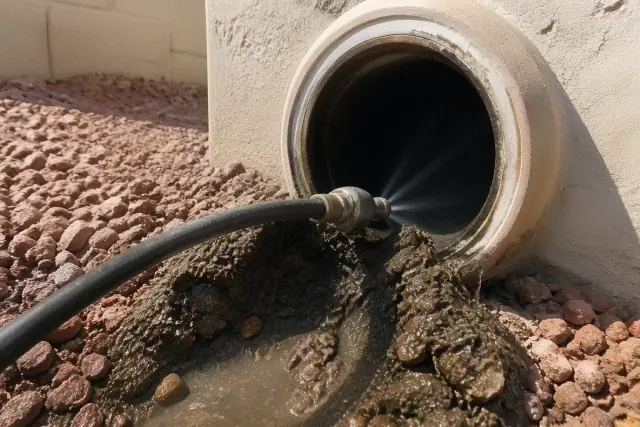
When every fixture slows or backs up, the shared main line needs attention rather than a single branch drain. We use cable machines or hydro jetting for the blockage, then confirm the result with a follow-up camera pass.
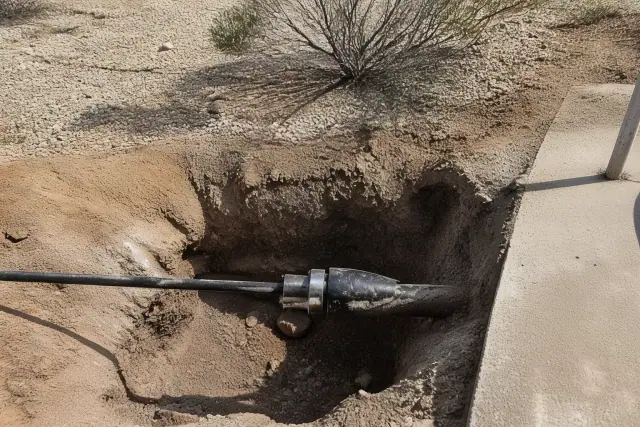
Trenchless repair can restore or replace a damaged line without opening the full run through a yard, driveway, or pool deck. When the existing pipe condition is suitable, property owners typically save 30 to 50 percent compared with traditional dig-and-replace work.
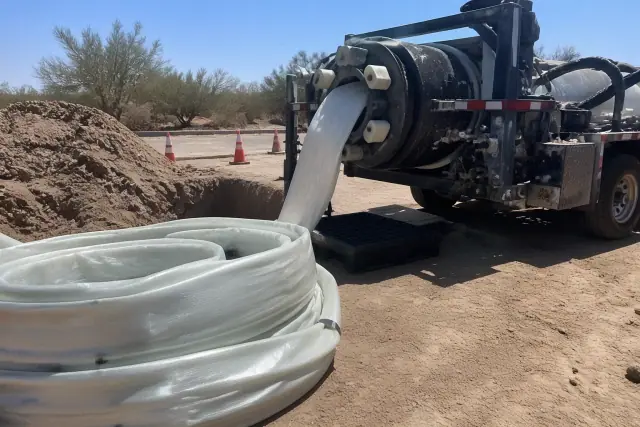
Cure-In-Place-Pipelining places a resin-saturated felt liner inside a cracked or root-infiltrated line and cures it into a new structural wall. The method follows ASTM F1216 and can restore service for decades when the host pipe has not collapsed or lost its shape.
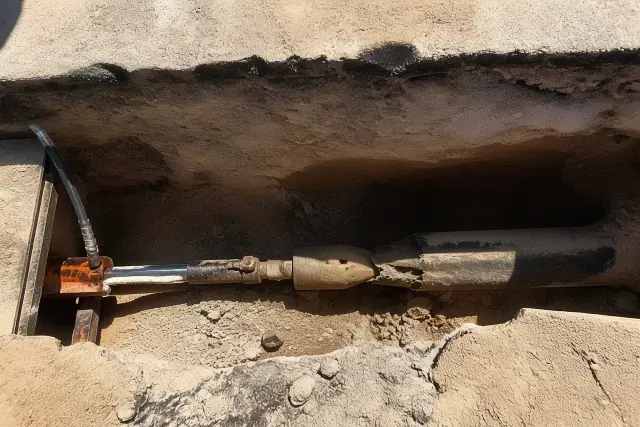
Pipe bursting pulls new HDPE through a fully deteriorated line while a bursting head fractures the old pipe outward. It is an option when damage is too severe for lining but full excavation beneath concrete, mature trees, or hardscape is impractical.
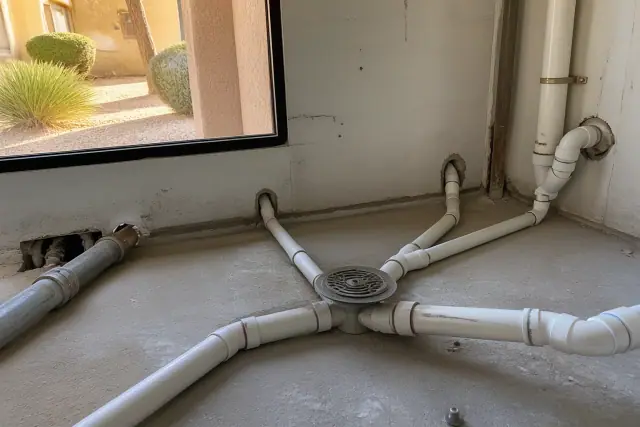
Restaurants, retail centers, and office buildings can schedule repair, grease-line jetting, camera inspection, and main-line cleaning around business hours. Maintenance planning accounts for the higher flow, grease, and debris common in commercial systems.
The right method depends on what the camera shows, how much of the line has failed, the pipe's shape and material, and what lies above it. We compare a spot repair, full replacement, CIPP lining, and pipe bursting against those conditions before making a recommendation.
Recorded camera footage locates the failure and separates a local clog from cracks, bellies, offset joints, roots, or collapse. That evidence keeps the repair recommendation tied to the actual condition.
Clay, Orangeburg, cast iron, PVC, and HDPE do not fail or accept repairs in the same way. Lining needs a pipe that still holds its shape, while a fully deteriorated line may require bursting or excavation.
One isolated break may support a targeted spot repair. Multiple failures, broad root intrusion, or repeated bellies usually shift the comparison toward lining, bursting, or full replacement.
A line beneath open soil is different from one beneath a driveway, pool deck, mature tree, or slab. Access points and restoration needs help determine whether excavation or a trenchless approach is more practical.
Depth, run length, material, hardscape, and labor all affect the comparison. An upfront quote separates repair work from surface restoration so property owners can weigh total cost and disruption.
City of Peoria permits apply to replacement, trenchless lining, and excavation that connects to the public sewer main. Because northern Peoria extends into Yavapai County, we verify jurisdiction before permit pulls and inspection scheduling.
Peoria sewer trouble often begins below the surface with soil movement, roots, buildup, poor slope, or aging pipe. A camera inspection distinguishes a cleanable restriction from structural damage before the condition threatens landscaping, hardscape, or a slab foundation.
Request InspectionMesquite and palo verde roots seek moisture at leaking joints and can spread through older clay pipe. Cleaning removes the immediate blockage, but camera footage shows whether the joint or pipe wall also needs repair.
Caliche and expansive clay shift as moisture changes between monsoon and drought conditions. That movement can crack a lateral, separate a joint, or push adjoining pipe sections out of alignment.
Settling fill soil can shift newer PVC within the first decade, and poor original slope can leave a low section that holds water and solids. Bellies create recurring backups even when the pipe wall itself is still intact.
Grease and hard-water mineral scale gradually narrow the inside of residential and commercial lines. Cable cleaning can open a blockage, while hydro jetting scours buildup from the full interior diameter.
Severe soil movement or long-term deterioration can crush a section or collapse the line completely. A collapsed pipe cannot be cleared or lined; it generally needs excavation or pipe bursting if access and surrounding conditions allow.
Multiple slow drains or every fixture backing up at once usually points to a main-line restriction. We clear the immediate blockage and camera the line so an underlying root, belly, or break is not left to cause the same problem again in six months.
Peoria's building stock ranges from 1980s ranch homes to new construction near Peoria Sports Complex, so diagnosis must account for pipe era, soil, and property layout. Our work spans residential laterals near Peoria Avenue, communities such as Arrowhead and Vistancia, and commercial corridors around 83rd Avenue and Bell Road.
Our technicians work with caliche and expansive clay regularly and account for how those layers affect excavation, backfill, and pipe alignment. That local context helps reduce surprises after the line is exposed.
Phoenix Sewers works as a licensed sewer repair contractor under the Arizona Registrar of Contractors. We coordinate permit pulls and inspections with the applicable local authority while accounting for Arizona wastewater and plumbing requirements.
Camera footage supports the recommended scope, and the upfront quote explains material and labor before work starts. A final camera pass verifies the repaired or cleaned line before the job is closed.
Each job moves from documented diagnosis to a clearly scoped repair and a final visual check. Excavation and trenchless projects follow the same decision path, with access and permitting adjusted to the selected method.
We review the symptoms and run a camera through the accessible line to locate the problem. Footage records pipe material, depth, joints, slope, roots, and structural damage.
We show you the failure point and explain whether cleaning, a spot repair, lining, bursting, or replacement matches the condition. Methods that do not fit the pipe's shape or damage are ruled out.
The quote lays out the recommended method, material, labor, access work, and expected surface restoration. Pricing is presented before the line is opened or a trenchless installation begins.
For replacement or trenchless work, we confirm the governing jurisdiction, pull required permits, and schedule inspections. The crew then prepares an excavation, cleanout, or small access point for the chosen method.
We cut out and replace a damaged section, install a new run, cure a liner, or burst-and-pull new pipe as scoped. Excavated areas are backfilled with compacted material to meet applicable requirements.
A final camera pass checks the completed repair, alignment, and open flow path before closeout. We review the footage and finish any inspection scheduling tied to the project.
Case Study 1: Targeted Repair Planning: Camera footage can isolate one failed section, helping a sound lateral avoid an unnecessary full replacement.
Case Study 2: Lower Surface Impact: When pipe condition permits, lining or bursting can address structural damage without opening the entire run through landscaping, concrete, or pool decking.
Case Study 3: Documented Completion: A final camera pass confirms the cleaned or repaired flow path and provides a visual closeout before the crew finishes.
Request an estimate to start with a sewer camera inspection and a repair recommendation based on the line's actual condition. Call to discuss an active backup, recurring slow drains, planned replacement, or a trenchless option.
These answers cover common Peoria sewer symptoms, repair methods, costs, inspections, permits, and service availability. A camera inspection is still the most reliable way to match general guidance to a specific lateral or main line.
Call Our ExpertsOne slow fixture usually suggests a local clog, while multiple slow drains or several fixtures backing up together point to the main line. Sewage surfacing in the yard, recurring clogs, and standing water visible in a camera inspection can indicate structural damage. The line should be inspected before repeated cleaning masks the underlying cause.
A broken line is repaired in one of two broad ways: from inside the existing route or by excavating to the pipe. CIPP lining and pipe bursting are trenchless methods, while traditional work exposes a spot or the full run and replaces damaged material. Camera findings determine which approach fits the pipe's material, depth, shape, and damage extent.
The process starts with a recorded camera inspection and a review of the findings. Phoenix Sewers then provides an upfront quote, handles permits and access planning when required, and completes the selected repair, lining, bursting, or replacement. A final camera pass confirms the completed work before closeout.
Cost depends on pipe depth and length, material, labor, and whether access crosses concrete or hardscape. Short residential runs can cost a few thousand dollars, while longer commercial lines can reach five figures. The inspection and quote should separate line work from access and restoration needs before work begins.
A spot repair can make sense when one section is cracked, separated, or crushed and the remaining lateral is sound. Multiple failure points, major root intrusion, repeated bellies, or widespread deterioration can make replacement more practical than repairing one section at a time.
Trenchless work is useful when a damaged line runs beneath landscaping, a driveway, pool decking, or another surface that would be costly to open and restore. Lining requires a host pipe that still holds its shape, while bursting can replace a line that is too deteriorated for a liner. Camera footage and available access points determine whether either method fits.
Cure-In-Place-Pipelining inserts a resin-saturated felt tube into the damaged pipe and cures it into a new structural wall inside the old line. It is used for cracked or root-infiltrated pipe and follows ASTM F1216 installation practice. It is not suitable when the host pipe has collapsed or lost its shape entirely.
Pipe bursting is used when a line is too deteriorated for lining but replacing it through the existing route is still practical. A bursting head fractures the old pipe outward while pulling new HDPE into place, reducing the need to excavate the full run.
Hydro jetting scours grease, hard-water mineral scale, and fine root hair from the full inside diameter of a pipe. It is useful for recurring main-line clogs and periodic commercial grease-line maintenance. A camera inspection helps confirm that the line can accept jetting and identifies any structural failure that cleaning cannot solve.
A push camera can identify cracks, offset joints, bellies, roots, standing water, and collapsed sections. It also documents pipe material, depth, and condition, with PACP coding used to organize findings. The footage helps distinguish a cleanable blockage from a repair or replacement need.
A recurring clog can be caused by roots, grease, mineral scale, a belly, an offset joint, or a collapsed section. A do-it-yourself clearing attempt may address only the symptom, allowing the backup to return within weeks. Cleaning followed by a camera pass shows whether buildup is gone or structural repair is still needed.
The City of Peoria requires permits for main-line replacement, trenchless lining, and excavation that connects to the public sewer main. Northern properties may fall within Yavapai County, so the responsible authority must be confirmed before work starts. Local enforcement of the Uniform Plumbing Code, Arizona Department of Environmental Quality wastewater standards, caliche, groundwater, and work near Agua Fria River floodplain areas can all affect project scope.
Homes built before the 1990s in central and older Peoria may still have clay or Orangeburg pipe, and established areas can also include cast-iron laterals. Clay and Orangeburg are vulnerable to root intrusion and joint failure as they age. A camera inspection confirms the actual material instead of relying on the home's age alone.
Yes. Phoenix Sewers works on homes and commercial properties throughout Peoria, including old town near P83, the Lake Pleasant corridor, and neighborhoods bordering Sun City and Glendale. Northwest Valley coverage also includes Sun City West and Surprise, with commercial scheduling available around business hours.
Same-day sewer repair is available for active backups, and 24/7 emergency service covers sewage surfacing in the yard, burst laterals, and complete line failures. Technicians arrive with camera and jetting equipment so diagnosis and mitigation can begin on the first visit. Planned line work uses standard scheduling.