Proudly serving Phoenix, Glendale, Scottsdale, Tempe, Mesa, Chandler & surrounding areasCall or Text 24/7: 480-259-3923
Aerial view of residential neighborhoods with desert landscaping and Saguaro cacti in Phoenix, AZ at golden hour.

Sewer Line Repair & Main Line Services in Glendale, AZ

Phoenix Sewers provides sewer line repair, sewer line replacement, drain cleaning, sewer camera inspection, hydro jetting, and trenchless sewer service across Glendale, Arizona. Our crews also handle main sewer line cleaning, sewer pipe lining, pipe bursting, and commercial sewer systems. We work with homeowners, property managers, restaurants, apartment communities, and retail properties. Every recommendation begins with the condition of the pipe and the access available at the property.

Glendale's expansive clay and caliche swell during monsoon rain and shrink through long dry stretches, putting repeated stress on buried joints. Homes built before the 1980s may still have original clay or cast iron laterals vulnerable to roots, corrosion, bellies, and collapse. Licensed technicians use residential and commercial equipment to identify the cause before recommending a repair. Active backups can receive same-day sewer repair attention, while routine camera inspections provide recorded documentation before a home sale or planned project.

Service routes cover Catlin Court, downtown Glendale, Sahuaro Ranch, Arrowhead Ranch, Sierra Verde, Stetson Hills, Peoria, Sun City, Surprise, Litchfield Park, and surrounding Maricopa County communities named in our service area.

★ ★ ★ ★ ★4.9/5 Average Rating - 20+ Years of Experience - Glendale Sewer Specialists - Residential & Commercial
Complete Sewer Services

Sewer Services in Glendale, AZ

Choose service according to the blockage, defect, pipe material, property access, and long-term condition revealed during inspection. The same diagnostic approach is available for property owners seeking sewer work in Scottsdale, AZ .

Sewer Line Repair

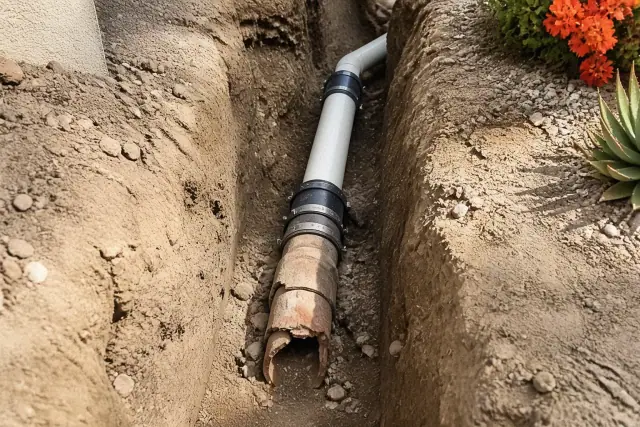
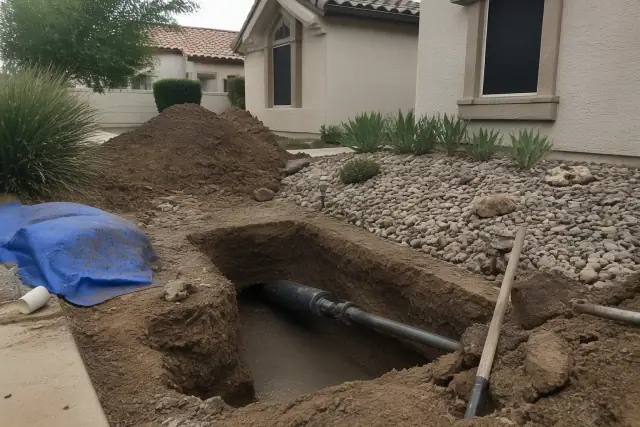
A deep trench in Glendale, AZ showing a sewer line repair with new PVC pipe connected to existing terra cotta piping.

A spot repair isolates a cracked, separated, or collapsed segment instead of excavating the whole line. Source pricing ranges from $60 to $250 per linear foot, with typical totals between $1,388 and $5,323 depending on depth, access, and material; required permits, inspection, and surface restoration are included in project planning.

Explore Service

Sewer Line Replacement

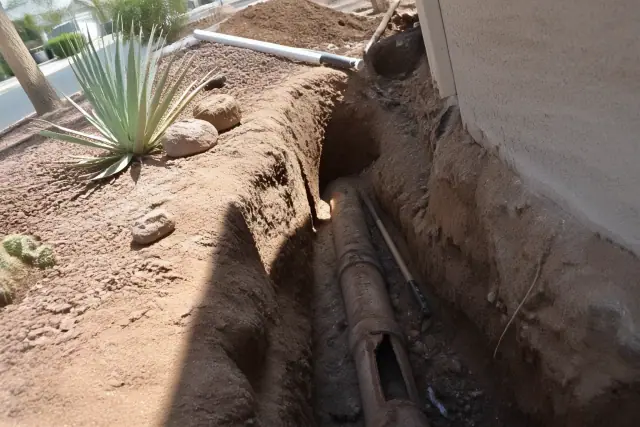
Deep trench with exposed cracked terra cotta pipe during a sewer line replacement at a residential site in Glendale, AZ.

Lines with multiple failures, severe sagging, or exhausted material may need full replacement by open trench or trenchless access. Schedule 40 PVC is rated well over 75 years and, in some conditions, past 100 years; each new gravity line is graded to the required 1/4 inch per foot fall.

Explore Service

Drain Cleaning

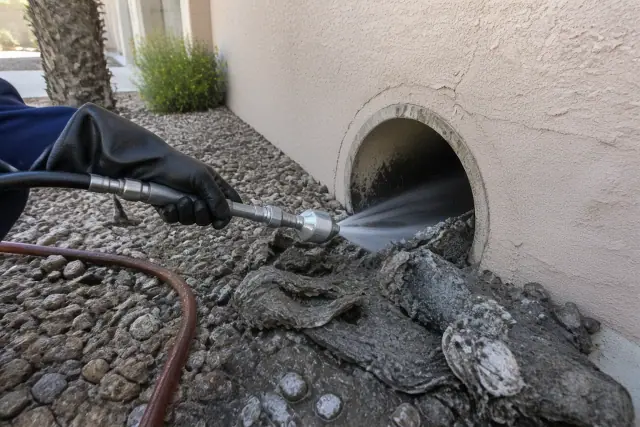
Technician performing hydro-jet drain cleaning on an industrial pipe in Glendale, AZ.

Mechanical cabling matched to the pipe diameter clears grease, soap scum, mineral buildup, and debris behind slow drains, gurgling toilets, and whole-house drainage problems. When the same blockage returns within weeks, a camera inspection can distinguish a simple clog from a structural defect.

Explore Service

Sewer Camera Inspection

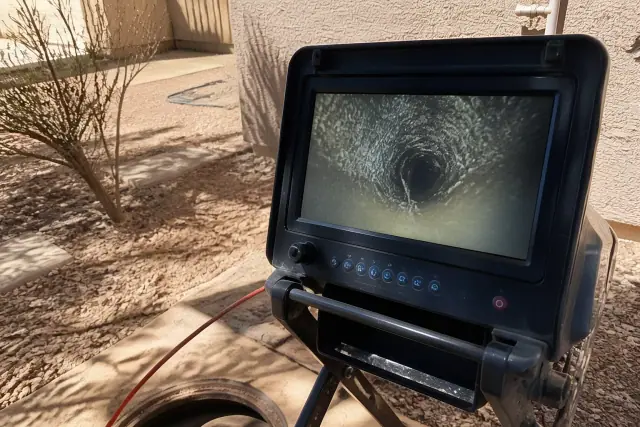
Sewer camera inspection monitor showing pipe damage at a residential jobsite in Glendale, AZ.

A high-resolution push camera reveals roots, cracks, bellies, offset joints, and corrosion without digging. Recorded footage documents the exact defect location and severity, supports real-estate decisions, and provides the standard diagnostic basis for excavation or trenchless quotes.

Hydro Jetting

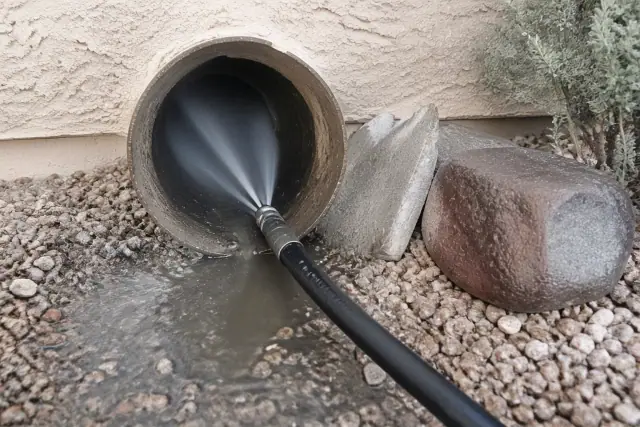
Hydro jetting nozzle cleaning an industrial sewer pipe in a gravel yard in Glendale, AZ.

Hydro jetting sends water through a specialized nozzle at typically 3,000 to 4,000 PSI to scour grease, scale, and root hair from the full pipe wall. A camera inspection comes first to confirm that an older or damaged pipe can safely handle the pressure.

Main Sewer Line Cleaning

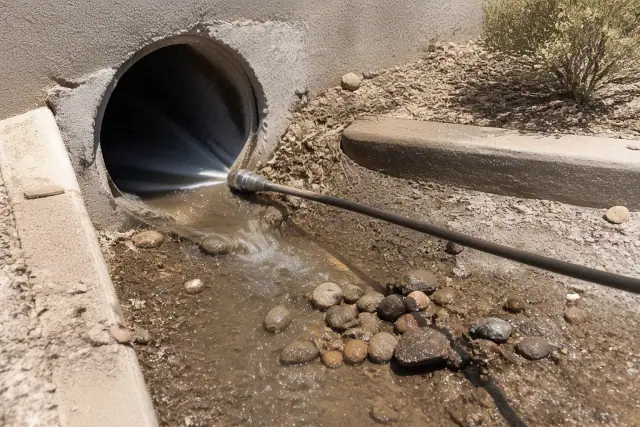
High-pressure hydro-jetting hose cleaning a sewer pipe at a worksite in Glendale, AZ.

Main line cleaning clears the run from the home's foundation cleanout toward the municipal sewer when every fixture is affected at once. For older homes with mature trees near the sewer easement, the source recommends preventive cleaning every 18 to 24 months.

Trenchless Sewer Repair

Trenchless sewer repair showing a pipe bursting head in an entry pit at a residential site in Glendale, AZ.

Pipe lining and pipe bursting use small access pits to protect driveways, landscaping, and pool decks from a full-length trench. These methods usually finish in one to two days instead of the week or more excavation can require, and total project scope may cost 30 to 50 percent less after restoration is considered.

Sewer Pipe Lining

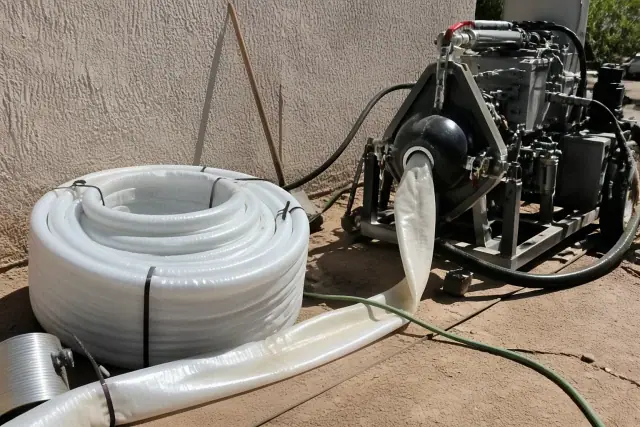
Resin coated liner and hydraulic inversion machine for sewer pipe lining in a Glendale, AZ jobsite.

Cured-in-place pipe lining forms a jointless new pipe from a resin-saturated felt tube inside a line that still holds its overall shape. It suits cracks, minor root intrusion, and corrosion, carries a typical design life of 50 years or more, and is installed using NASSCO PACP defect-coding and installation practices described in the source.

Sewer Pipe Bursting

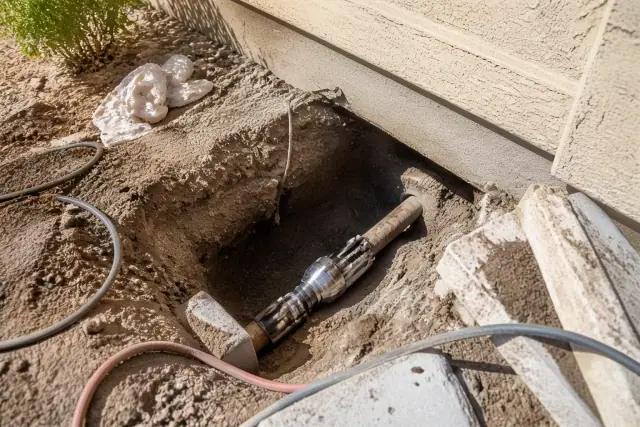
Hydraulic pipe bursting head in a trenchless entry pit at a residential property in Glendale, AZ.

Pipe bursting fractures an unusable or undersized line outward while pulling new HDPE into place. It can replace an older 4-inch clay lateral with a modern 6-inch pipe when the existing shape is too damaged for lining but property conditions allow trenchless access.

Commercial Sewer Services

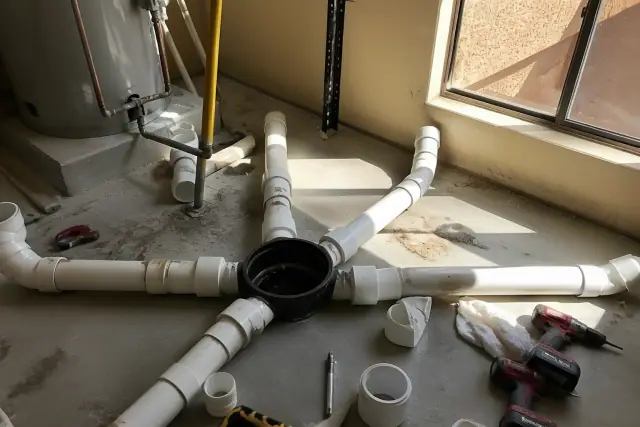
Maintenance of industrial PVC sewer pipes and floor drain in a Glendale, AZ utility room.

Commercial service supports restaurants, apartment complexes, retail centers, warehouses, manufacturing sites, and shared multi-unit mains. Along 59th Avenue, Bell Road, and the Westgate area, diagnosis and coordinated scheduling help reduce disruption for tenants, customers, and operating kitchens.

Service Selection

Choosing the Right Sewer Solution in Glendale

Glendale's population was 248,325 at the 2020 census, and its sewer laterals span mid-century clay and cast iron through modern PVC. Choosing between cleaning, spot repair, lining, bursting, and replacement therefore requires an individual assessment of condition, access, slope, and expected disruption.

Camera-Verified Pipe Condition

Recorded camera footage separates a removable blockage from cracks, root entry, corrosion, offsets, or a collapsed section. That evidence keeps the recommendation tied to the actual defect rather than defaulting to full excavation.

Property Access and Restoration

Yard access, concrete, driveway placement, mature landscaping, and pool decks affect whether open trenching or small trenchless access pits make sense. Restoration needs belong in the comparison because they influence both total scope and property disruption.

Pipe Shape and Material

A line that retains its shape may qualify for CIPP lining, while a collapsed, badly misaligned, or undersized pipe may require bursting or excavation. Clay joints, Orangeburg deterioration, cast iron corrosion, and PVC condition each call for a different long-term decision.

Flow and Maintenance Needs

One-time fixture trouble differs from a main-line slowdown affecting the entire property. Repeated grease, scale, or root buildup may call for scheduled cleaning, while recurring trouble in one exact location points toward a structural defect that cleaning alone will not correct.

Depth and Total Project Scope

Depth, line length, utility location, access, and landscape or concrete restoration all shape a repair quote. The source notes that deeper, more complex projects can reach $12,000 to $25,000, so a camera-based scope is necessary before comparing methods.

Repair Timeline and Disruption

An isolated spot repair commonly takes one day, while a full open-trench replacement generally takes two to four days depending on run length and restoration. Access, inspection scheduling, and pipe condition determine the property-specific timeline provided after diagnosis.

Glendale Sewer Issues

Common Sewer Line Problems in Glendale

Slow drains throughout the house, gurgling, recurring clogs, wet yard areas, sewage backup, and indoor odors can signal trouble beyond a single fixture. A camera inspection identifies whether the cause is debris, roots, corrosion, soil movement, a sag, or a break.

Request Sewer Inspection

Broken or Collapsed Sewer Lines

Clay-soil movement and material age can crack, separate, or collapse a sewer lateral. Whole-house slowdowns, gurgling, wet soil over the line, or an active yard overflow call for prompt diagnosis before sewage spreads into surrounding ground.

Recurring Sewer Line Clogs

Grease, wipes, hard-water mineral scale, and foreign objects account for many blockage calls. When a clog repeatedly forms in the same spot, an offset joint, root opening, corrosion, or a belly may be catching waste after each cleaning.

Tree Root Intrusion

Mature trees near Sahuaro Ranch and Historic Catlin Court send roots toward moisture during dry summers. Roots enter small cracks or loose joints; jetting can remove the mass temporarily, but repeated intrusion may require lining or replacement.

Corroded and Deteriorated Pipe

Cast iron installed through the 1970s has a typical service life around 50 years, while some original clay laterals in Glendale are now 50 to 70 years old. Corrosion, joint separation, and material deterioration can thin walls, open leaks, or progress to collapse.

Bellied or Misaligned Pipe

A belly is a low section caused by settling or improper installation, where paper and waste collect instead of continuing downhill. Lining does not lift that sag, so the affected section usually needs bursting or excavation and reinstallation at the correct grade.

Indoor Sewer Gas Odors

A dry P-trap, cracked vent stack, or broken sewer line can allow sewer gas into or around a home. Tracing the source matters because the repair can range from resetting a fixture trap to repairing an underground structural failure.

Why Choose Us

Why Choose Phoenix Sewers in Glendale?

Local sewer work calls for familiarity with caliche excavation, expansive soil, legacy pipe materials, permitting, and occupied properties. Phoenix Sewers combines that local context with documented diagnosis, method comparisons, and final verification before a project is closed.

Glendale Soil Knowledge

Caliche is a dense calcium-carbonate hardpan common across the Salt River Valley, and it can resist excavation or shift alignment as moisture conditions change. Crews familiar with Glendale's older core and newer Arrowhead and Sierra Verde communities know to distinguish soil-related offsets from root or material failure.

Licensed Permit Coordination

Repair and replacement permits are coordinated through the City of Glendale Building Safety Division when required, while municipal connections must meet Maricopa County Environmental Services Department standards. Licensed contractors registered with the Arizona Registrar of Contractors carry the bonding and insurance needed to pull those permits.

Installation Testing and Verification

After repair or replacement, the line is pressure-tested and camera-verified before backfilling or closing access. Final grade is checked for gravity flow, required city inspection is coordinated, and disturbed landscaping or concrete is restored to match the original site condition.

Clear Repair Process

Our Sewer Repair Process in Glendale

The process moves from documented inspection to a condition-based recommendation, professional repair, testing, required inspection, and surface restoration. Property owners can review the camera findings and applicable options before work begins.

01.

Inspect from the Cleanout

The technician checks cleanout access and runs a high-resolution camera through the line. Property owners can watch while the camera locates blockages, cracks, roots, offsets, corrosion, or a sag.

02.

Document Pipe Condition

Inspection records the pipe material, diameter, condition, and defect location throughout the run. This documentation turns visible footage into a defined scope for cleaning, repair, or replacement.

03.

Compare Applicable Options

The crew explains the methods that fit the finding, which may include cabling, jetting, a spot repair, lining, bursting, or full replacement. Cost differences, estimated timing, access, restoration, and expected durability are reviewed before selection.

04.

Complete the Sewer Work

Licensed technicians carry out the chosen cleaning, repair, lining, bursting, or replacement method using equipment sized for the line. Commercial access and multi-unit scheduling are coordinated to limit avoidable interruption.

05.

Test and Camera-Verify

The finished line is pressure-tested, and a camera confirms the repaired section before access points close. Grade is checked to ensure waste and water can continue moving by gravity.

06.

Inspect and Restore the Site

Any required City of Glendale inspection is coordinated before final sign-off. After approval, crews backfill access, restore disturbed landscaping or concrete, and close the project with the site returned to its prior condition.

Service Outcomes

Sewer Service Results for Glendale Properties & Businesses

Case Study 1: Targeted Residential Repair: Camera footage can isolate one cracked lateral section behind a Glendale home, allowing a spot repair instead of unnecessary full-yard excavation.

Case Study 2: Trenchless Property Protection: Lining or bursting can preserve driveways, mature landscaping, and pool decks when the pipe condition and access points support a no-dig method.

Case Study 3: Coordinated Commercial Work: Inspection and scheduling for shared mains can reduce disruption at apartment communities, restaurants, retail centers, warehouses, and manufacturing properties.

Request Sewer Service

Schedule a Glendale
Sewer Service
Consultation

Describe the slowdown, backup, odor, property access, or prior repair history, and request an evaluation based on the actual line condition. A camera inspection can clarify the next step before cleaning, repair, or replacement begins.

Glendale Sewer Help

Sewer Service FAQs for Glendale, AZ

These answers cover repair timing, cost factors, pipe life, insurance, drainage slope, maintenance, trenchless methods, permits, and signs of a failing Glendale sewer line. A camera inspection is still needed to determine the condition and scope at a specific property.

Call Our Sewer Team

Timing depends on whether the defect is isolated, trenchless, or a full excavation. A property-specific schedule is provided after camera inspection confirms line length, damage, access, and restoration needs.

Cost varies with depth, pipe material, access, defect length, utility location, and surface restoration. A camera inspection is necessary before quoting because a local crack may qualify for a spot repair or lining, while collapse or misalignment can require a larger project.

A single crack may receive a spot repair or a cured-in-place liner if the pipe retains its shape. A collapsed, severely misaligned, or undersized section may require pipe bursting or open-trench replacement, followed by pressure testing and camera verification.

Material rating is only one factor. Soil movement, water chemistry, installation grade, joint condition, corrosion, and tree-root proximity can shorten real service life, so older clay, cast iron, and newer PVC lines each need inspection on their own condition.

Standard policies generally exclude gradual wear, age-related failure, and root intrusion, while some may cover sudden damage from a covered peril or include separate service-line coverage. Check the exact policy with the insurer and keep camera documentation of the pipe condition for any claim review.

Too little fall lets waste settle, while too much can allow liquid to outrun solids. Installation grade must support proper gravity flow, so it is checked before a repaired or replaced line is backfilled.

Underground sewer work involves utility location, sewage exposure, code-required slope, municipal connections, permitting, and inspection. The source recommends licensed contractors registered with the Arizona Registrar of Contractors rather than treating this as a practical do-it-yourself repair.

Slow drains throughout the property, gurgling toilets, repeated clogs, wet areas over the pipe route, sewage backup, and persistent sewer odors can indicate main-line trouble. Camera inspection distinguishes a blockage from roots, corrosion, a belly, offset joints, or collapse.

A recurring clog in one location often means a structural feature is trapping waste after each cleaning. Root entry, corrosion, an offset joint, or a bellied section can require repair rather than repeated cabling alone.

Cabling breaks through a localized clog, while hydro jetting scours grease, scale, and root hair from the full interior pipe wall. Jetting is useful for recurring restaurant buildup and older residential lines, but the pipe should be camera-inspected first for pressure-sensitive damage.

Preventive maintenance is most relevant when mature trees grow near the sewer easement or previous buildup has returned. Inspection history, pipe material, and recurrence should guide the schedule rather than waiting for a whole-house backup.

Lining cures a jointless pipe inside an existing line that still holds its shape. Bursting fractures the old line while drawing in new HDPE, making it better suited to severely damaged or undersized pipe that cannot support a liner.

Repair and replacement work may require permitting through the City of Glendale Building Safety Division, and municipal connections must meet applicable Maricopa County Environmental Services Department standards. Permit applications and required inspections are coordinated as part of replacement and trenchless projects described in the source.

Roots seek moisture during dry weather and can enter through tiny cracks or loose joints in clay and other aging pipe. Once inside, they expand and restrict flow; repeated intrusion often signals that the opening itself needs lining or replacement.

The source supports restaurants, apartment complexes, retail centers, warehouses, manufacturing sites, commercial kitchens, and shared multi-family main lines. Diagnosis and access scheduling are coordinated to reduce disruption for tenants, customers, and business operations.