Proudly serving Phoenix, Glendale, Scottsdale, Tempe, Mesa, Chandler & surrounding areasCall or Text 24/7: 480-259-3923
Aerial view of residential neighborhoods with desert landscaping and Saguaro cacti in Phoenix, AZ at golden hour.

Hydro Jetting in Phoenix, AZ for Sewer Line Grease, Scale & Root Removal

Phoenix Sewers provides hydro jetting, drain cleaning, main sewer line cleaning, and sewer camera inspection for homes and businesses in Phoenix, AZ. Our services address grease, scale, sand, sludge, biofilm, and root mass inside sewer lines. We also clean commercial grease trap lines and larger sewer runs for restaurants, HOAs, industrial accounts, and other commercial properties. When inspection reveals structural damage, we can explain sewer line repair, trenchless lining, pipe bursting, or replacement options instead of recommending cleaning alone.

Caliche-heavy desert soil moves, and decades-old clay laterals in Phoenix neighborhoods can crack, shift, and admit roots. Mineral-heavy water delivered through the Salt River Project and Central Arizona Project canal systems also contributes to calcium and lime scale over time. Hydro jetting scours the full pipe wall with calibrated water pressure instead of leaving buildup around a narrow channel. We inspect the line first so pressure and flow match the pipe material and condition.

Our technicians work under Arizona Registrar of Contractors licensing and have NASSCO Pipeline Assessment and Certification Program training for evaluating pipe condition. Phoenix Sewers is licensed and insured for residential drain lines and commercial grease trap systems regulated under Arizona Department of Environmental Quality discharge standards.

Phoenix Sewers provides hydro jetting in Phoenix and throughout the greater Phoenix metro area, including Scottsdale, Tempe, Mesa, Glendale, and Chandler.

★ ★ ★ ★ ★4.9/5 Average Rating · 20+ Years of Experience · Thousands of Customers Helped · Licensed & Insured · Residential & Commercial

Hydro Jetting Options & Benefits

What Is Hydro Jetting?

Hydro jetting sends high-pressure water through a specialized nozzle with forward- and backward-facing jets. The nozzle cuts through grease, sludge, sand, scale, biofilm, and root mass while pulling loosened debris toward the access point.

Unlike cable snaking, which usually opens a channel through a blockage, pressurized water cleans the full pipe circumference. Removing wall-to-wall buildup can restore more of the pipe's interior diameter without digging.

A camera inspection determines whether the line is sound enough for jetting and helps the technician select pressure, flow, and nozzle type. The line is inspected again after cleaning to verify debris removal and identify cracks, bellies, offsets, or other conditions that cleaning cannot repair.

Benefits of Hydro Jetting

Hydro jetting is designed for a more complete clean than a drain snake can provide. It supports both blockage removal and preventive maintenance when the pipe is structurally sound.

  • Scours the full pipe wall instead of cutting only a narrow channel
  • Removes grease, scale, sand, sludge, and biofilm
  • Cuts root mass when paired with a root-cutting nozzle
  • Uses water rather than drain-cleaning chemicals
  • Helps restore the pipe's usable interior diameter
  • Produces results that typically last 1 to 2 years or longer, compared with weeks to months for snaking
  • Supports preventive cleaning before a sewer backup damages fixtures, slabs, or landscaping
  • Provides before-and-after camera verification of pipe condition and cleaning results
Phoenix Hydro Jetting Services

Hydro Jetting Services

We use camera-guided water jetting for residential main lines, commercial grease systems, roots, recurring backups, and other buildup-related sewer problems. Each service is matched to the access point, pipe diameter, material, condition, and blockage type.

Main Sewer Line Cleaning

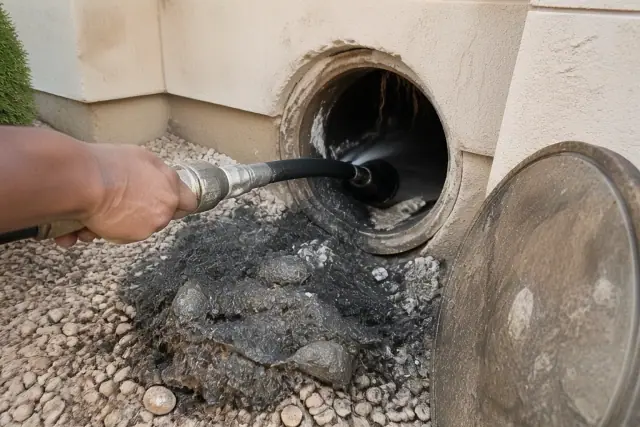
Hydro-jetting nozzle cleaning a main sewer line at a jobsite in Phoenix, AZ.

Main sewer line cleaning targets the pipe between a home or building and the City of Phoenix Water Services Department connection point. These lines are usually 4 to 6 inches in diameter, and a blockage there often causes slow drains throughout the entire property.

Request Estimate

Commercial Grease Trap Line Cleaning

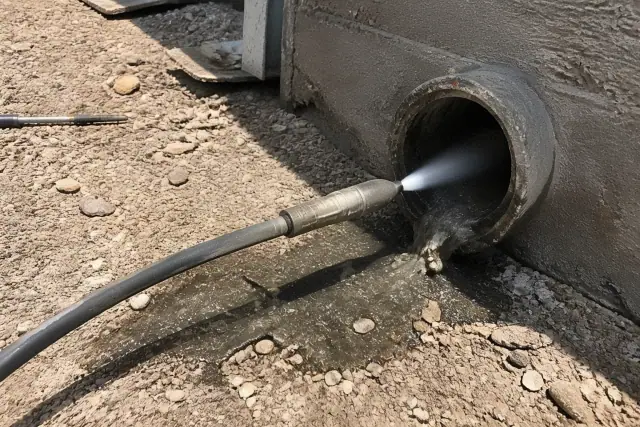
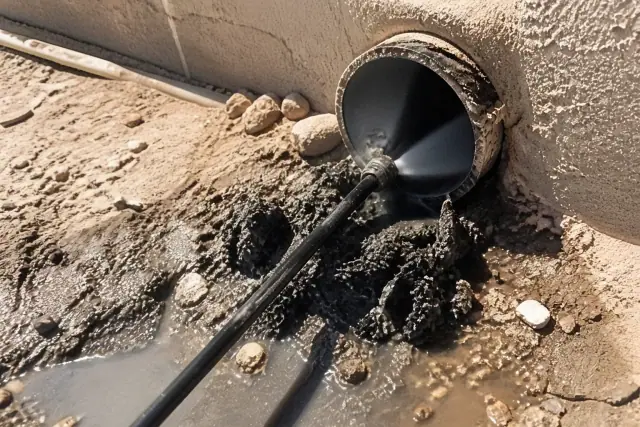
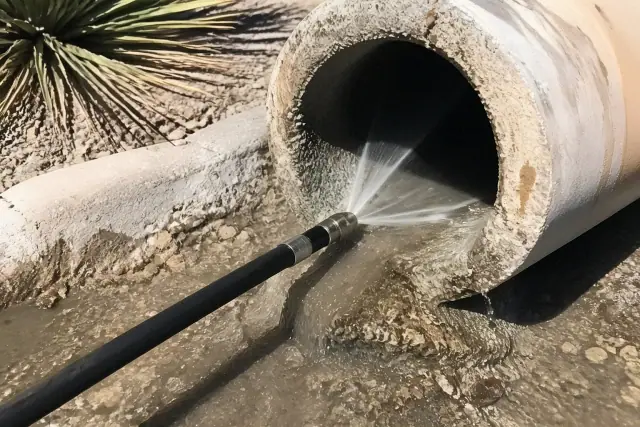
High pressure hose nozzle cleaning a commercial grease trap line in a desert drainage pipe in Phoenix, AZ.

Commercial hydro jetting clears grease interceptor lines and connected sewer runs for restaurants, multi-unit properties, shopping centers, and industrial sites. For Phoenix kitchens operating under city and Arizona Department of Environmental Quality discharge rules, regular cleaning helps control grease buildup and avoid disruptions.

Request Estimate

Tree Root Intrusion Removal

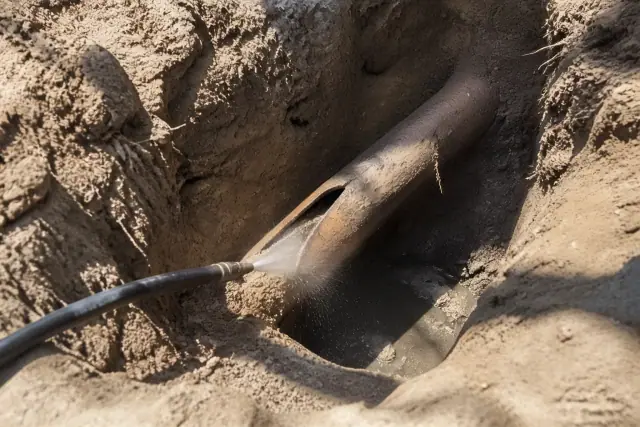
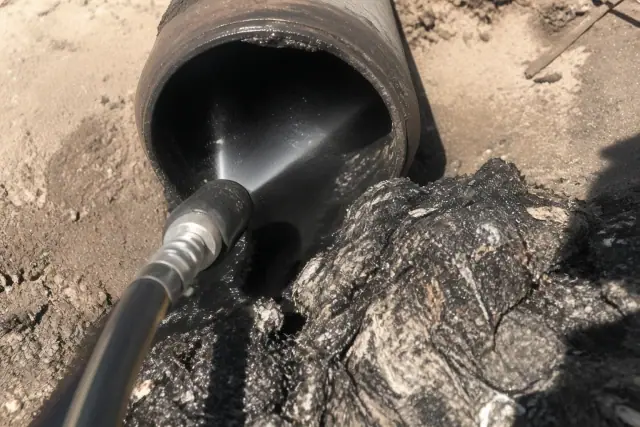
Hydro jetting removing tree roots from a cracked pipe in a deep trench at a jobsite in Phoenix, AZ.

A root-cutting nozzle shreds root mass inside the sewer and flushes the debris back through the cleanout. Because jetting does not repair the cracked clay joint that admitted the roots, we inspect afterward and explain trenchless repair when the entry point needs a lasting structural solution.

Request Estimate

Whole-House Drain Cleaning

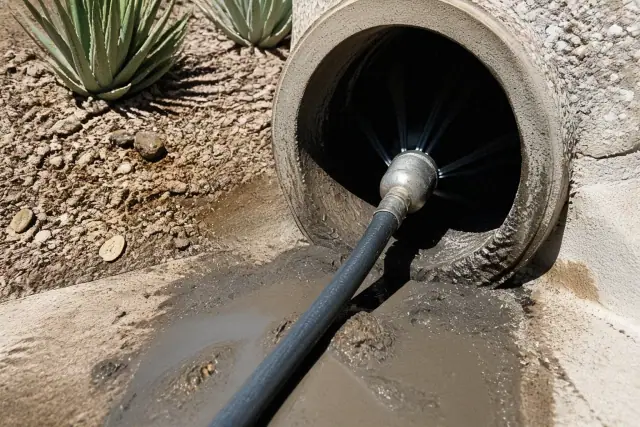
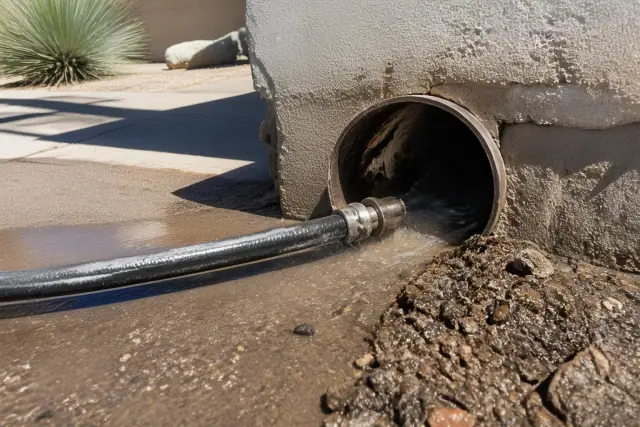
High pressure hydro jetting nozzle clearing debris from a drain pipe in a desert landscape in Phoenix, AZ.

Whole-house drain cleaning through the main line addresses kitchen, bathroom, and toilet drains that are slowing or backing up together. Jetting removes the grease, hair, mineral deposits, and other residue that can keep causing trouble after a cable has opened only a small path.

Request Estimate

Sewer Camera Inspection

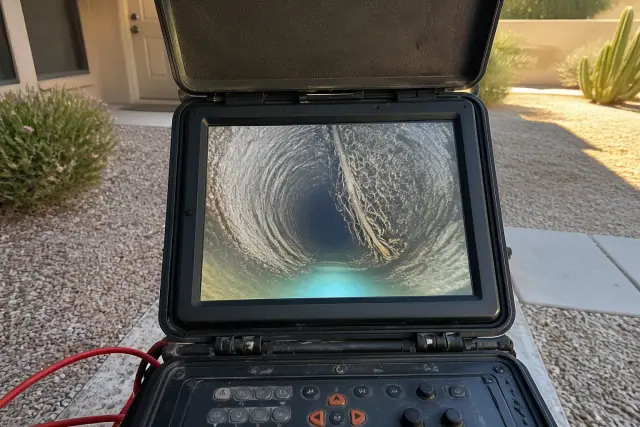
Sewer camera inspection monitor showing pipe damage and root obstructions at a residential jobsite in Phoenix, AZ.

A push camera fed through the cleanout shows pipe material, joint condition, bellies, offsets, and root intrusion in real time. We can show you the footage so the recommendation for cleaning, lining, repair, or replacement is based on visible conditions inside the line.

Request Estimate

Same-Day Total Backup Cleaning

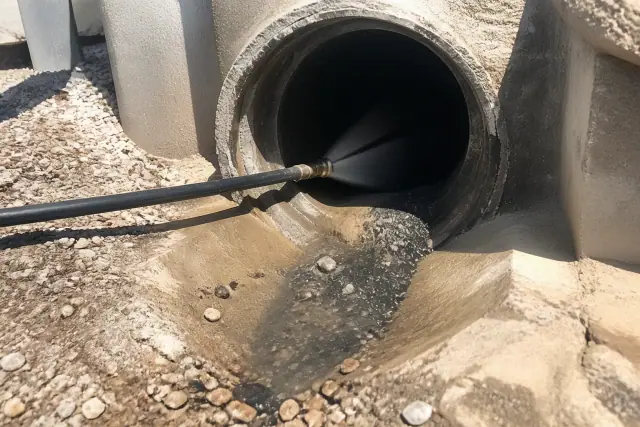
Hydro-jetting nozzle clearing an industrial drainage pipe with debris in Phoenix, AZ.

When every drain is affected by a backed-up main line, we prioritize same-day drain cleaning calls for total system backups. A camera and jetter help identify and clear the blockage, while the follow-up inspection checks whether recurring trouble points to damage that cleaning cannot solve.

Request Estimate
Cleaning Methods and Line Conditions

Types of Hydro Jetting Approaches

Nozzle choice, water flow, pressure, and maintenance schedule change with the pipe and the problem. The following approaches cover residential lines, commercial systems, root intrusion, preventive cleaning, and cases that require repair instead of jetting.

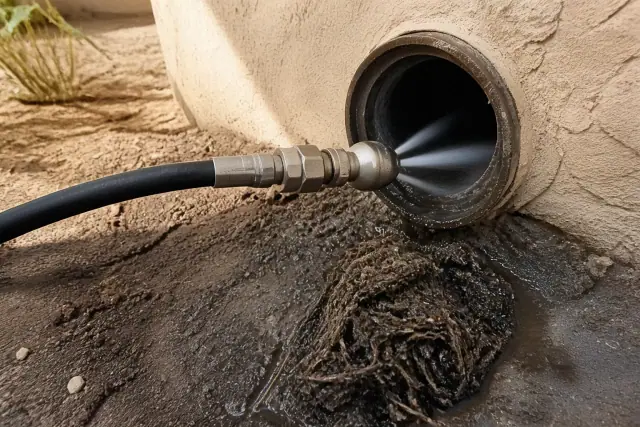
Hydro-jetting nozzle clearing debris from a residential main drain line in Phoenix, AZ.

Residential Main-Line Jetting

Residential jetting clears the main line serving kitchens, bathrooms, toilets, and other household fixtures. Pressure is adjusted for the material and condition seen on camera before cleaning begins.

  • Whole-house main sewer cleaning
  • Kitchen grease and food-residue removal
  • Bathroom hair and biofilm removal
  • Calcium and lime scale cleaning
  • Clay, cast iron, and PVC pressure calibration
Request Estimate
High-pressure hose nozzle clearing debris from an industrial pipe at a job site in Phoenix, AZ.

Commercial High-Flow Jetting

Commercial units deliver the higher flow needed for grease-heavy systems and 6-inch and larger main lines. Work can be scheduled around business hours to limit disruption to operations.

  • Restaurant grease interceptor lines
  • Multi-unit property sewer mains
  • Shopping center sewer runs
  • Manufacturing and industrial lines
  • Cleaning scheduled around business operations
Request Estimate
Hydro jetting equipment clearing debris from an industrial drainage pipe at a jobsite in Phoenix, AZ.

Root-Cutting Nozzle Jetting

Root-cutting jetting is used when roots have entered cracked or separated joints in older sewer laterals. It restores flow by shredding and flushing the root mass, then camera inspection determines whether the pipe needs lining or replacement.

  • Specialized root-cutting nozzle
  • Root mass flushed toward the cleanout
  • Useful for cracked clay pipe joints
  • Follow-up camera inspection for entry points
  • Repair recommendation when roots can re-enter
Request Estimate
High-pressure hose nozzle clearing debris from an industrial drainage pipe during maintenance in Phoenix, AZ.

Preventive Maintenance Jetting

Preventive jetting removes buildup before it becomes another blockage. The right interval depends on camera findings, pipe age, grease output, and whether mature trees are close to the sewer line.

  • Most Phoenix homes: every 18 to 24 months
  • Heavy-grease properties: quarterly to semi-annually
  • Older clay lines: interval based on camera condition
  • Tree-lined properties: more frequent service when roots return
  • Schedule based on the line, not a blanket rule
Request Estimate
High-pressure hose nozzle clearing debris from an industrial drainage pipe at a worksite in Phoenix, AZ.

Cleaning or Trenchless Repair

Jetting solves buildup and blockages, but it cannot fix a collapse, separation, offset joint, or belly that holds standing water. Camera findings determine whether cleaning, cured-in-place lining, pipe bursting, or open excavation is appropriate.

  • Jetting for sound pipe with internal buildup
  • Lining for a sound pipe path with damaged walls
  • Pipe bursting for undersized or severely damaged lines
  • Open excavation when site and pipe conditions require it
  • Camera-based sizing under City of Phoenix permit requirements
Request Estimate
Finding the Right Fit

Choosing the Right Hydro Jetting Approach

The right approach begins with evidence from inside the sewer. Our camera-led process distinguishes removable buildup from structural damage and matches the equipment to residential or commercial line conditions.

Camera-Guided Pressure Selection

Camera footage shows whether the line is clay, cast iron, or PVC and reveals weak joints, corrosion, offsets, and standing water. That evidence guides pressure, flow, and nozzle selection before the pump starts.

Licensed and NASSCO-Trained Technicians

Our technicians have NASSCO Pipeline Assessment and Certification Program training for interpreting sewer camera findings. Arizona Registrar of Contractors licensing and insurance cover the residential and commercial sewer work described on this page.

Residential and Commercial Capability

Truck-mounted equipment can be configured for household laterals, commercial grease systems, and larger industrial sewer runs. Matching flow and PSI to line diameter allows one inspection-led process to serve very different property types.

What Sets Us Apart

Why Choose Phoenix Sewers for Hydro Jetting Service?

We inspect before and after jetting, show customers the footage, and recommend cleaning only when the pipe condition supports it. If a belly, collapse, separation, or offset joint makes repair the better choice, we explain the available trenchless or replacement paths instead of applying pressure to a line that will not hold.

Request an Assessment

Recurring Whole-House Clogs

When kitchen, bathroom, and toilet drains slow together, the restriction often sits in the main sewer line. A cable may restore temporary flow, but buildup left on the walls can lead to reactive snaking every few months.

Grease and Biofilm Buildup

Grease and biofilm cling to the pipe circumference, narrowing the passage even after a snake has punched through the center. Water jetting strips that coating from the wall and pulls the loosened material back toward the access point.

Calcium and Lime Scale

Phoenix's mineral-heavy canal-sourced water can leave bonded calcium and lime scale inside aging lines over time. Jetting removes this wall buildup rather than simply pushing a loose obstruction farther downstream.

Tree Root Intrusion

Original clay laterals from the 1920s through 1950s can have joints weakened by decades of movement in expansive caliche soil. In neighborhoods such as Arcadia, Willo, Sunnyslope, Encanto-Palmcroft, Coronado, and Garfield, mature roots may enter those gaps in search of water.

Sand, Sludge, and Debris

Sand and sludge can settle in low points and combine with grease or scale to restrict flow. Backward-facing nozzle jets move the loosened debris toward the cleanout rather than leaving it farther down the sewer run.

Structural Pipe Damage

A collapsed section, separated pipe, offset joint, or belly holding standing water can create the same slow-drain symptoms as ordinary buildup. Hydro jetting cannot restore a missing or failed pipe wall, so camera evidence is essential before treatment.

How It Works

Our Hydro Jetting Process

Each job follows an inspection-cleaning-verification sequence. This protects vulnerable pipe, directs the right nozzle and pressure to the obstruction, and documents the result after debris removal.

01.

Run the Initial Camera Inspection

We feed a push camera through the cleanout to locate buildup and view the material, joints, roots, corrosion, offsets, and bellies. This inspection determines whether jetting is appropriate.

02.

Assess the Pipe and Access Point

The technician confirms the cleanout or vent access, pipe diameter, material, condition, and the amount of buildup. These details also clarify the labor and equipment reflected in the estimate.

03.

Calibrate Pressure, Flow, and Nozzle

We match water pressure and flow to clay, cast iron, or PVC and select a cleaning or root-cutting nozzle for the blockage. Older or weakened lines receive lower settings than sound modern pipe.

04.

Jet From Downstream to Upstream

The hose advances through the line while forward jets cut the obstruction and backward jets scour the circumference. Working from downstream to upstream helps pull dislodged material toward the access point.

05.

Monitor Debris Removal

We monitor grease, scale, sludge, sand, and root debris as it returns at the access point. The technician continues controlled passes until flow is restored and the material stops returning.

06.

Verify the Clean Pipe on Camera

A second camera pass confirms the pipe is clean and documents cracks or joint failures that buildup may have hidden. If the pipe is structurally sound, most residential jobs finish in one visit.

Restore Clearer Sewer Flow

Schedule a Hydro Jetting Assessment

Request an inspection-led estimate for a recurring clog, whole-house backup, grease-heavy commercial line, root intrusion, or preventive cleaning. We will review access, pipe diameter, line length, buildup, and camera findings before providing a clear cost breakdown.

Hydro Jetting Help

Phoenix Hydro Jetting FAQs

These answers cover maintenance intervals, pressure, older pipes, costs, roots, commercial lines, and the difference between cleaning and structural repair. A camera inspection provides the line-specific information needed for a final recommendation.

Call Our Experts

For most Phoenix homes, we recommend hydro jetting every 18 to 24 months, especially where older clay pipe is present. Restaurants and other properties with heavy grease output typically need service quarterly to semi-annually. Mature trees near a sewer line may justify a shorter interval, but the camera findings should set the schedule.

Professional hydro jetting equipment typically runs between 1,500 and 4,000 PSI, with flow adjusted for the pipe material and diameter. Older clay or aging cast iron receives lower settings, while sound modern PVC can use the higher end of the range. We select pressure only after reviewing the camera inspection.

Hydro jetting does not damage sound pipe when a trained technician inspects the line first and calibrates pressure correctly. Risk increases when a pipe is already severely corroded, cracked, or open at the joints. Those conditions may call for lining or another repair instead of full-pressure cleaning.

Routine residential hydro jetting in the Phoenix area typically runs in the range of a few hundred dollars for a standard drain line. Longer main runs and grease-heavy or recurring commercial work can cost more. Access, line length, pipe diameter, buildup, and included camera verification all affect the final estimate.

It is safe for most PVC, cast iron, and sound clay pipe when the pressure is calibrated to the line. Older Phoenix clay laterals require careful inspection because soil movement may have weakened joints over time. We may reduce pressure or recommend lining when the camera shows a vulnerable pipe.

Standard drain cleaning often means cable snaking, which opens a path through the clog but leaves buildup on the pipe wall. Hydro jetting uses pressurized water to clean the full interior surface and remove grease, scale, sand, and biofilm. Snaking may be enough for an isolated clog, while jetting is better suited to recurring buildup and whole-line cleaning.

Yes. A root-cutting nozzle can shred root mass inside the pipe and flush it through the cleanout. Jetting does not repair the cracked joint that allowed roots to enter, so a follow-up camera inspection may lead to a lining or pipe-bursting recommendation.

If drains slow again within a few weeks of cleaning, the line may have a belly, offset joint, collapse, or another structural problem rather than simple buildup. Symptoms alone cannot confirm the cause. A sewer camera inspection is the reliable way to distinguish damage from debris.

Hydro jetting can remove grease, sludge, sand, calcium and lime scale, biofilm, and other buildup from sound pipe. A root-cutting nozzle can also break up root mass. It cannot restore a collapsed or separated section of pipe.

We inspect through the cleanout, select pressure and nozzle settings, and jet the line from downstream to upstream. Debris is monitored at the access point before a second camera pass verifies the result. Most residential jobs finish in one visit when the pipe is sound and access is straightforward.

No. Hydro jetting uses high-pressure water to loosen buildup and flush debris toward the access point. The cleaning action comes from calibrated pressure, water flow, and the selected nozzle rather than chemical drain cleaners.

Yes. Commercial equipment supplies the higher flow needed for grease interceptor lines and larger sewer mains serving restaurants, multi-unit properties, shopping centers, and industrial sites. Service can be scheduled around business hours to reduce disruption.

It can clear a total-system backup when grease, scale, sludge, roots, or other removable debris is blocking a sound main line. We prioritize same-day drain cleaning calls when every drain in the house is affected. Camera inspection confirms whether jetting can restore flow or whether structural repair is necessary.