Proudly serving Phoenix, Glendale, Scottsdale, Tempe, Mesa, Chandler & surrounding areasCall or Text 24/7: 480-259-3923
Aerial view of residential neighborhoods with desert landscaping and Saguaro cacti in Phoenix, AZ at golden hour.

Sewer Line Repair & Trenchless Services in Mesa, AZ

Phoenix Sewers provides sewer line repair, sewer line replacement, drain cleaning, sewer camera inspection, hydro jetting, and trenchless sewer services throughout Mesa, AZ. We work on aging Orangeburg, clay, and cast-iron lines as well as newer residential and commercial systems. Each job starts with the level of diagnosis the problem requires, from a camera inspection to main-line cleaning or a replacement plan. Our licensed, code-compliant approach is built around repairing what has failed and explaining the available options.

Mesa's caliche, expansive desert clay, and shifting soil can contribute to cracked, separated, offset, or bellied sewer lines. Much of the city's housing stock dates from the 1950s through the 1970s, and thousands of properties still rely on legacy pipe that was not built to last a century. Slow drains, gurgling fixtures, sewer odors, and backups across multiple fixtures can signal a developing main-line problem. An inspection identifies the location and condition of the trouble before a small clog turns into a more disruptive sewage backup.

As the East Valley's most populous city, Mesa has more than 504,000 residents and a sewer network that spans older homes, newer neighborhoods, restaurants, apartment complexes, retail centers, and light industrial properties. Our service area includes Dobson Ranch, the Fiesta District, Red Mountain, Las Sendas, Eastmark, and properties around Falcon Field and Sloan Park.

★ ★ ★ ★ ★4.9/5 Average Rating - 20+ Years of Experience - Mesa Sewer Specialists - Residential & Commercial
Complete Sewer Care

Sewer Services Across Mesa, AZ

From a targeted repair or routine drain cleaning to full line replacement, the right service depends on pipe condition, blockage type, access, and soil conditions. We serve homes and businesses throughout Mesa, with East Valley coverage extending to Tempe, Gilbert, Chandler, AZ , Apache Junction, and Queen Creek.

Sewer Line Repair

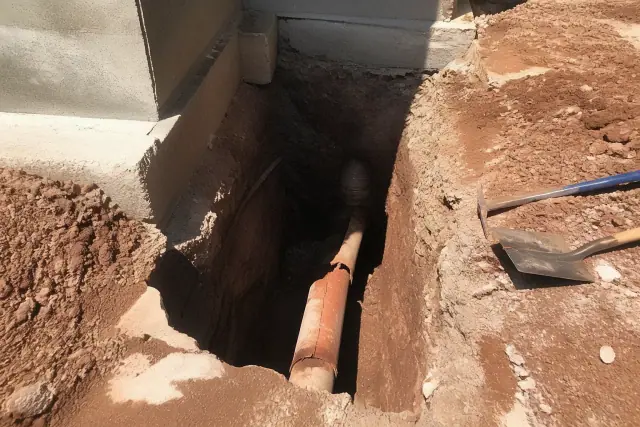
A deep trench in Mesa, AZ showing a cracked terra cotta sewer pipe during a foundation excavation and repair.

When a sewer line cracks, separates, or develops a belly in shifting soil, we use camera findings to locate the failure before excavation begins. A spot repair can address the damaged area while licensed, permitted work and code-matched pipe materials keep the scope focused on what has actually failed.

Explore Service

Sewer Line Replacement

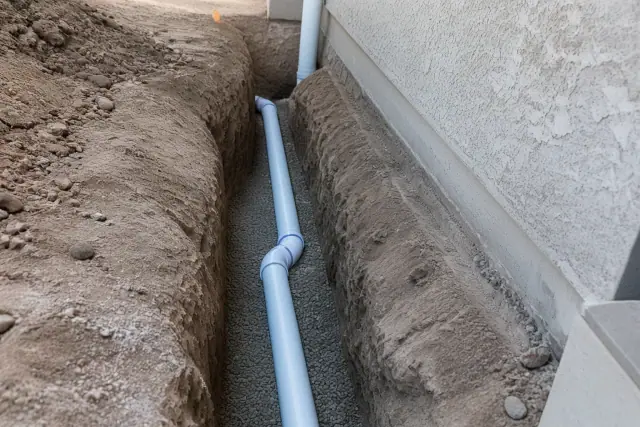
New PVC sewer pipe installed in a gravel trench during a home foundation excavation in Mesa, AZ.

Many Mesa homes built through the 1960s still have original Orangeburg pipe that can deteriorate and deform with age. We replace failing Orangeburg, clay, and cast-iron lines with modern PVC or HDPE piping rated for decades of service, using open-trench or trenchless methods according to access and soil conditions.

Explore Service

Drain Cleaning

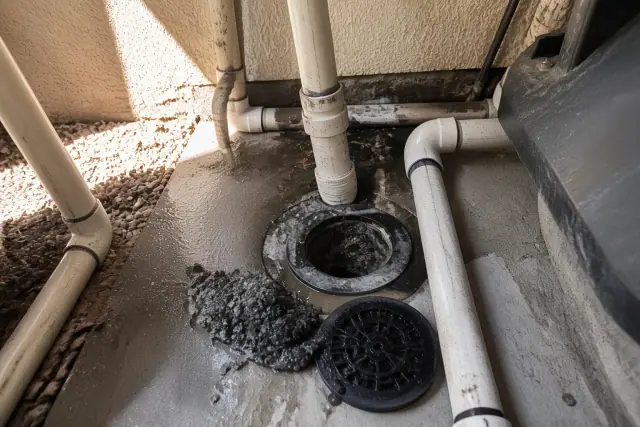
PVC drainage pipes and debris at a sewer cleaning job in a basement in Mesa, AZ.

Slow drains, gurgling fixtures, and recurring clogs often point to a partial drain-line blockage. Mechanical snaking or targeted hydro jetting can clear grease, soap scum, mineral buildup, debris, and roots in smaller feeder lines, making drain cleaning a practical first step before more invasive work is considered.

Explore Service

Sewer Camera Inspection

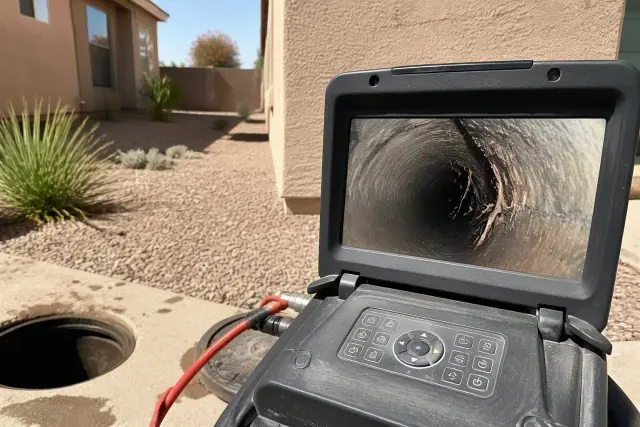
Sewer camera inspection monitor showing pipe obstructions at a residential job site in Mesa, AZ.

A fiber-optic camera provides a real-time view of root intrusion, offset joints, bellied sections, and pipe material. A locator transmitter pinpoints depth and position from the surface, and we record footage for every inspection so you can review the problem; a camera inspection is often included when you schedule a repair estimate.

Hydro Jetting

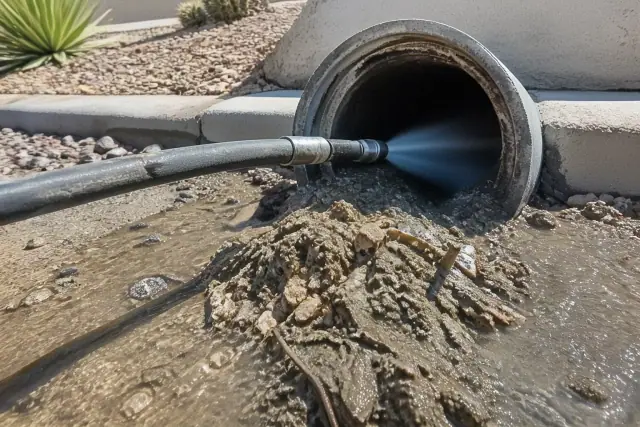
High-pressure hose nozzle clearing debris from an industrial drain pipe at a worksite in Mesa, AZ.

Hydro jetting uses a high-pressure water stream, typically in the 3,000 to 4,000 psi range, to scour grease, scale, sludge, and root intrusion from the full interior wall of a pipe. It is suited to main lines with heavy buildup or recurring root mats and is often followed by a camera inspection to confirm the line is clear.

Main Sewer Line Cleaning

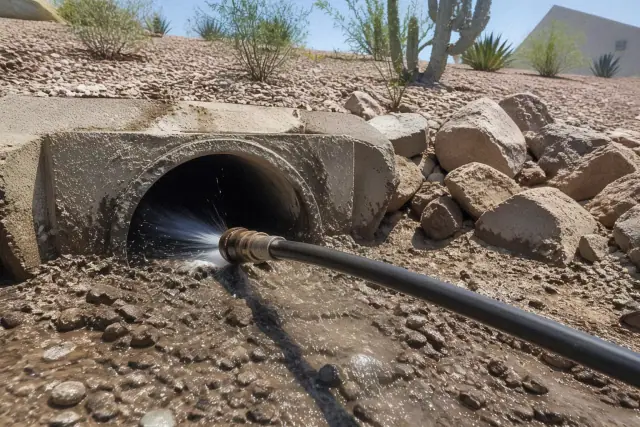
High-pressure nozzle cleaning sediment from an outdoor drainage pipe in Mesa, AZ.

Main sewer line cleaning targets the primary pipe carrying wastewater from a property to the City of Mesa collection system. When several fixtures back up together, the blockage is more likely in this main line than in one local drain, so cleaning is paired with camera inspection to identify the obstruction and confirm the result.

Trenchless Sewer Repair

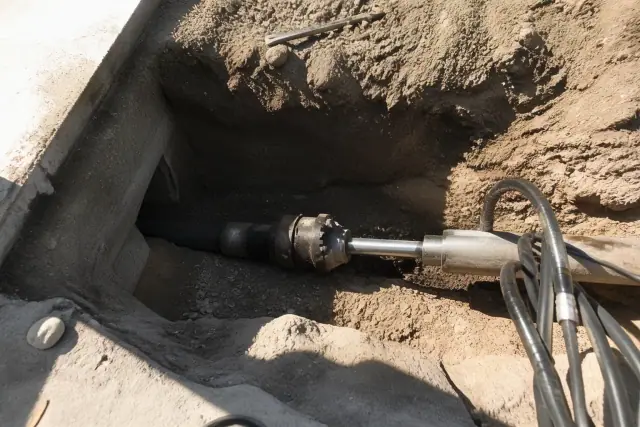
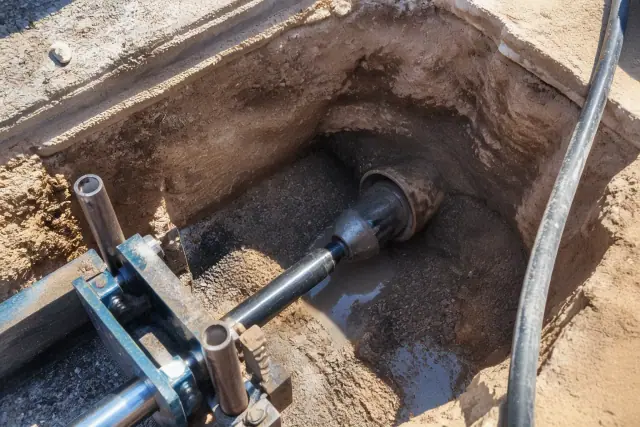
Hydraulic bursting head inside an entry pit during trenchless sewer repair work in Mesa, AZ.

Trenchless repair can rehabilitate or replace a damaged line without excavating a continuous trench through a yard, driveway, pool deck, or mature desert landscaping. Depending on the existing pipe and available access, CIPP lining or pipe bursting may require only one or two small access pits.

Sewer Pipe Lining

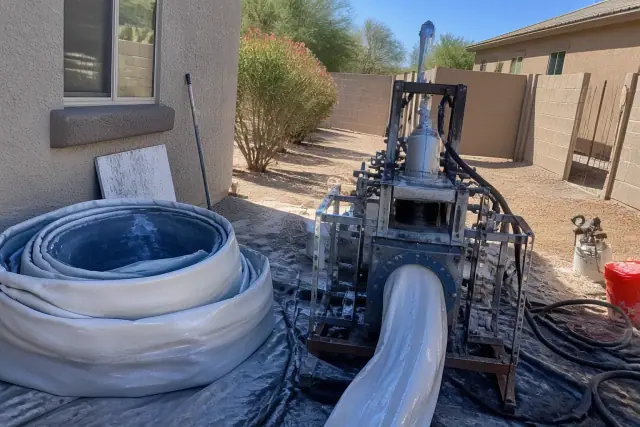
Resin-coated pipe liner and hydraulic inversion machine at a sewer repair worksite in Mesa, AZ.

Cured-in-place pipe, or CIPP, uses a resin-saturated felt tube cured inside a cracked, corroded, or root-damaged host pipe to create a new jointless pipe. The method follows standards developed by the National Association of Sewer Service Companies, restores full flow capacity, and can rehabilitate suitable lines beneath driveways, patios, or mature trees without disturbing the surface above.

Sewer Pipe Bursting

Hydraulic bursting head positioned in a trenchless pipe repair pit at a job site in Mesa, AZ.

Pipe bursting is the trenchless replacement option we consider when an existing sewer line needs replacement rather than an interior liner. Its suitability depends on the old pipe's condition, the route, soil, and available access points, so a camera inspection and site review come before the method is selected.

Commercial Sewer Services

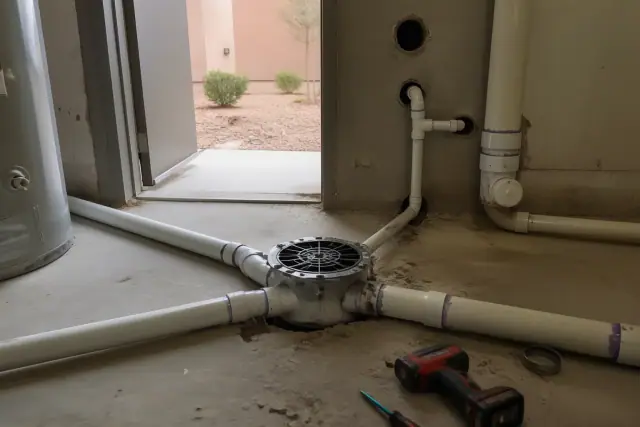
PVC drainage pipes and floor drain assembly in a commercial utility room with exterior desert landscaping in Mesa, AZ.

Restaurants, apartment complexes, retail centers, and light industrial properties often have higher flow volumes, grease loads, larger-diameter pipe, and more frequent cleaning needs than single-family homes. Commercial planning may also include backflow-prevention considerations tied to Maricopa County health and plumbing code, coordination around business hours when conditions allow, and a full camera inspection before repairs are scoped.

Service Selection

Choosing the Right Sewer Solution in Mesa

The best-fit method follows the evidence inside the line rather than the loudest symptom at a fixture. Camera findings, pipe material, structural condition, blockage type, property use, surface improvements, and access all help separate a cleaning job from a spot repair, liner, or replacement.

Camera and Locator Evidence

A real-time camera view shows roots, offsets, bellies, cracks, and pipe material, while the locator identifies depth and position from the surface. That evidence narrows the work area and helps avoid unnecessary test pits.

Repair or Replacement

A localized failure may be suitable for a focused spot repair, while widespread deterioration or a deformed legacy line can point toward replacement. The decision should reflect the condition seen throughout the pipe, not simply its age.

Open Trench or Trenchless

Access, soil conditions, pipe route, and the condition of the host line determine whether open excavation, CIPP lining, or pipe bursting is appropriate. Trenchless work is especially useful when the route crosses a driveway, patio, pool deck, or mature landscaping.

Snaking or Hydro Jetting

Mechanical snaking can open a targeted blockage, while hydro jetting cleans grease, scale, sludge, and root mats from the pipe wall. Severity, pipe condition, and whether the clog keeps returning guide the choice.

Pipe Material and Condition

Orangeburg can deform with age, clay joints can admit roots, and cast iron can corrode. Identifying the material and whether the line remains structurally sound is essential before recommending cleaning, lining, repair, or replacement.

Residential or Commercial Demand

A single-family drain line and a restaurant, apartment complex, retail center, or industrial system do not carry the same flow or grease load. Pipe diameter, usage, maintenance needs, and scheduling constraints belong in the service plan.

Mesa Sewer Warning Signs

Common Sewer Problems on Mesa Properties

Early warning signs often reveal whether a problem is isolated to one fixture or developing in the main sewer line. Recurring symptoms can trace to buildup, roots, aging materials, or soil movement, and a camera inspection helps distinguish among them before the damage becomes more disruptive.

Request Inspection

Slow Drains and Gurgling

A slow tub, sink, or floor drain with gurgling sounds often indicates a partial blockage rather than a failed fixture. Grease, soap scum, minerals, or debris can restrict the line until cleaning restores the path.

Multiple-Fixture Backups

When toilets, tubs, and other fixtures back up at the same time, the common main line is a likely source. Main-line cleaning and camera inspection identify what is blocking the shared wastewater route.

Sewer Odors

A sewer odor rising from a floor drain can accompany a blockage or another drain-line issue. Because odor alone does not show the cause or location, the surrounding fixture symptoms and inspection findings matter.

Root Intrusion

Mesquite and ash roots can enter vulnerable joints and damaged areas, creating mats that catch debris and cause repeat clogs. Cleaning removes the intrusion, while camera footage reveals whether the pipe also needs structural repair.

Aging or Deformed Pipe

Legacy Orangeburg, clay, and cast-iron lines can deteriorate, deform, corrode, or become vulnerable at their joints. Material identification helps determine whether a limited repair, CIPP liner, or replacement is the sound option.

Cracked, Offset, or Bellied Lines

Expansive desert clay and uneven settlement can crack a pipe, separate or offset a joint, or create a low bellied section where waste collects. A camera and surface locator show the defect's position so the repair plan can stay focused.

Why Choose Us

Why Mesa Property Owners Choose Phoenix Sewers

Phoenix Sewers combines licensed, code-compliant work with a diagnosis-first approach. Recorded camera footage lets property owners see the problem, while recommendations account for Mesa soil, legacy pipe materials, access, and the actual extent of failure. The goal is a clear scope suited to the line rather than an automatic full replacement.

Recorded Inspection Findings

We record every camera inspection so you can see roots, cracks, offsets, bellies, or material changes inside the line. The footage provides a practical basis for discussing the repair estimate.

Local Mesa Pipe Knowledge

Mesa's caliche, expansive clay, older Orangeburg and clay lines, mature trees, and newer commercial development create very different sewer conditions. Local context helps connect symptoms to likely pipe and access issues without replacing inspection evidence.

Licensed, Code-Compliant Planning

Repair planning includes the correct permit channels, code-matched materials, and a scope based on the failed section or full line condition. Commercial work also accounts for applicable Maricopa County health and plumbing requirements.

CIPP Lining Steps

Our CIPP Sewer Lining Process in Mesa

When a structurally suitable pipe is a candidate for cured-in-place lining, the work follows a staged process from cleaning through final verification. Each step prepares the host line or confirms that the new jointless liner is correctly placed.

01.

Clean the Host Pipe

Grease, scale, sludge, debris, and root intrusion are cleared so the existing pipe wall can accept the liner. Cleaning also makes the following camera view easier to evaluate.

02.

Camera-Inspect and Measure

The cleaned host pipe is inspected to confirm its condition and mapped for the liner. Exact measurements establish the required fit before resin preparation begins.

03.

Prepare the Exact-Fit Liner

A felt tube is sized to the measured line and saturated with the appropriate resin. This prepared liner will form the new pipe inside the existing host.

04.

Insert the Liner

The saturated liner is placed through the pipe using inversion or a pull-in-place method. The chosen insertion method depends on the line and available access.

05.

Cure the Resin

Hot water, steam, or UV light cures the liner according to the resin type. Cure time typically runs a few hours, and the line is often back in service the same day.

06.

Verify with a Final Camera Pass

A final camera inspection verifies the finished liner before the job is closed. The completed CIPP should present a smooth, jointless interior that resists new root entry.

Practical Outcomes

Sewer Service Outcomes for Homes & Businesses

Case Study 1: Targeted Spot Repair: When a camera identifies a single failure point, repairing only the failed section can limit excavation, cost, and disruption.

Case Study 2: Trenchless Rehabilitation: A suitable line beneath a driveway, patio, or mature tree may be rehabilitated with CIPP to create a smooth, jointless pipe without disturbing the surface above.

Case Study 3: Commercial Flow Restoration: Hydro jetting followed by camera verification can remove accumulated grease, scale, and sludge from restaurant, apartment, retail, or industrial main lines.

Plan the Next Step

Schedule a Mesa
Sewer Service
Estimate

Whether you are dealing with recurring clogs, a suspected root problem, an aging Orangeburg line, or backups across multiple fixtures, start with a diagnosis that identifies the cause and location. Request an estimate or call Phoenix Sewers to discuss inspection, cleaning, repair, lining, or replacement options for your Mesa property.

Mesa Sewer Answers

FAQs About Sewer Service in Mesa, AZ

These answers explain the symptoms, inspection methods, cleaning options, repair choices, and property conditions described on this page. A camera inspection is the practical way to confirm what is happening inside a specific sewer line.

Call Our Sewer Team

Slow drains across the property, gurgling fixtures, sewer odor from a floor drain, or several fixtures backing up together can point to a main-line issue. A camera inspection can distinguish a partial blockage from roots, an offset joint, a belly, or a damaged pipe.

A fiber-optic camera provides a real-time view of the pipe material and conditions such as roots, cracks, offsets, and bellied sections. A locator transmitter marks the depth and surface position, and recorded footage lets you review the finding.

The choice depends on how much of the line has failed, the pipe material, its structural condition, access, and soil conditions. A localized defect may suit a spot repair, while widespread deterioration or deformation can make replacement the more appropriate plan.

Orangeburg is a tar-impregnated fiber pipe that deteriorates and deforms with age. When inspection shows a failing Orangeburg line, replacement with modern PVC or HDPE may be considered according to the route and access.

Cable snaking can punch through or remove a targeted blockage. Hydro jetting scours grease, scale, sludge, and root intrusion from the full interior pipe wall, which can be more useful for heavy or recurring buildup.

Yes, when the existing pipe condition and available access support a trenchless method. CIPP lining or pipe bursting can avoid a continuous trench across landscaping, hardscape, a driveway, or a pool deck.

CIPP is used for cracked, corroded, or root-damaged lines that are otherwise structurally suitable for rehabilitation. The process forms a smooth, jointless pipe inside the host line and is verified with a final camera pass.

Pipe bursting may be considered when the line needs trenchless replacement rather than an interior liner. Camera findings, the route, soil conditions, and usable access points determine whether it fits the property.

A post-jetting camera pass confirms whether grease, scale, sludge, roots, and other buildup have been cleared. It can also reveal structural defects that were hidden by the blockage.

Yes. Main-line cleaning targets the primary pipe carrying wastewater from the property to the municipal collection system, while a single-drain service addresses a local fixture or feeder line. Backups at several fixtures are a stronger sign that the shared main line needs attention.

Root removal can clear intrusions in feeder drains or main sewer lines, depending on severity and pipe condition. Camera footage is important afterward because recurring roots may indicate an open joint, crack, or other structural entry point.

The services described here apply to restaurants, apartment complexes, retail centers, and light industrial properties. These systems can involve higher flow, grease loads, larger pipe, more frequent jetting, and backflow-prevention considerations.

Pipe condition, route, access, soil, and the type of failure all influence the excavation method. Trenchless lining or bursting may fit some properties, while others require an open trench to reach and replace the failed line.

Caliche, expansive desert clay, and uneven settlement can contribute to cracks, separated or offset joints, and bellied sections. Soil context helps explain a symptom, but the camera and locator identify the actual defect.

Phoenix Sewers works throughout Mesa, including Dobson Ranch, the Fiesta District, Red Mountain, Las Sendas, Eastmark, and areas around Falcon Field and Sloan Park. The supported East Valley service area also includes Tempe, Gilbert, Chandler, Apache Junction, and Queen Creek.