Proudly serving Phoenix, Glendale, Scottsdale, Tempe, Mesa, Chandler & surrounding areasCall or Text 24/7: 480-259-3923
Aerial view of residential neighborhoods with desert landscaping and Saguaro cacti in Phoenix, AZ at golden hour.

Sewer Camera Inspection in Phoenix, AZ for Precise Pipe & Lateral Diagnostics

Phoenix Sewers provides sewer camera inspection for homes and businesses in Phoenix, AZ. Our sewer line services include drain cleaning, hydro jetting, sewer line repair and replacement, and trenchless repair options. We use high-resolution push cameras and robotic crawler cameras to document what is happening inside a line. From residential laterals to commercial mains, our team can diagnose the condition and explain the available next steps.

Phoenix's expansive caliche soil shifts through monsoon downpours and summer heat cycles above 110 degrees, stressing older clay and cast iron laterals. A camera can reveal root intrusion, offset joints, cracks, collapsed pipe, standing water, and flow restrictions without excavation. Recorded footage and distance markers replace guesswork with a documented condition assessment. You can review the findings before deciding whether cleaning, a spot repair, lining, pipe bursting, or replacement fits the defect.

We inspect through an existing cleanout, roof vent, or toilet flange, then provide video and a written summary tied to distance readings. Call when drains keep slowing, several fixtures back up together, sewer odors appear, or a real estate closing requires clear findings.

Phoenix Sewers provides sewer camera inspection in Phoenix and across Scottsdale, Tempe, Mesa, Glendale, and the surrounding Maricopa County metro area.

★ ★ ★ ★ ★4.9/5 Average Rating · 20+ Years of Experience · Thousands of Customers Helped · Licensed & Insured · Residential & Commercial

Sewer Camera Inspection Options & Benefits

How Sewer Camera Inspection Works

A waterproof camera head travels through the sewer lateral and sends live video to a surface monitor. For most residential lines measuring 4 to 6 inches in diameter, a flexible push camera provides a clear view of pipe walls, joints, and obstructions.

We feed the camera from the best available access point and record continuously toward the city main tap or property line. During the run, we note pipe material, joint condition, slope, standing water, and footage-counter readings at each point of interest.

A sonde transmitter in the camera head lets us locate a defect's position and depth from above ground. We review the recorded footage with you and document findings using a defect-grading approach consistent with NASSCO's Pipeline Assessment and Certification Program standards.

What a Video Inspection Reveals

A complete camera run shows both structural defects and flow restrictions, helping separate a blockage that needs cleaning from pipe damage that needs repair. The findings give property owners and repair crews a specific place to start.

  • Root intrusion entering through separated pipe joints
  • Hairline cracks, longitudinal fractures, and full breaks
  • Offset or misaligned joints caused by soil settlement
  • Bellied sections holding several inches of standing water
  • Collapsed clay tile or deteriorated Orangeburg pipe
  • Grease, scale, and debris restricting usable diameter
  • Pipe material, slope, and joint condition along the run
  • Exact footage markers for targeted cleaning or repair
Video Inspection Services

Sewer Camera Inspection Services

We adapt the camera, access method, and documentation to the property and reason for the inspection. Residential, real estate, commercial, main-line, and active-backup scopes each require a focused approach.

Residential Sewer Camera Inspection

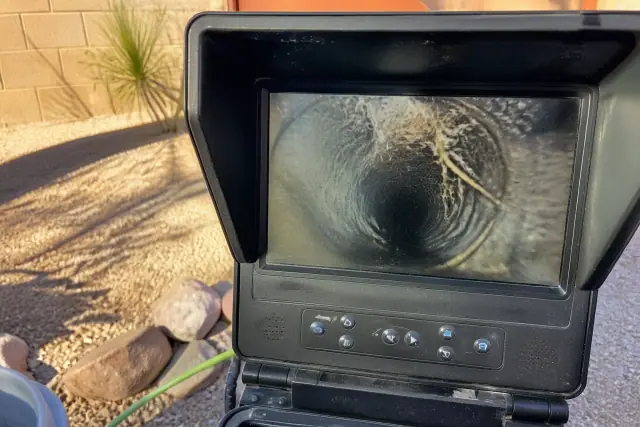
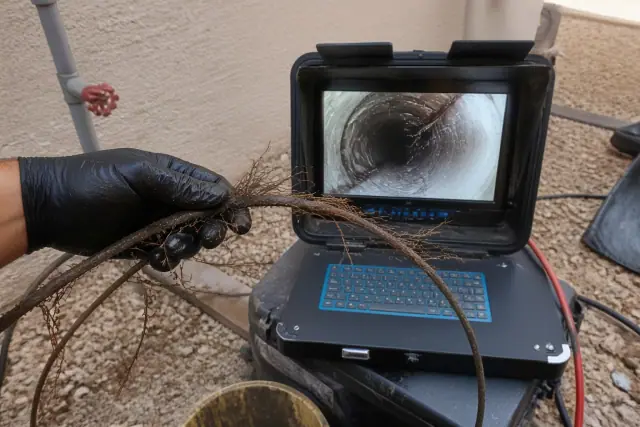
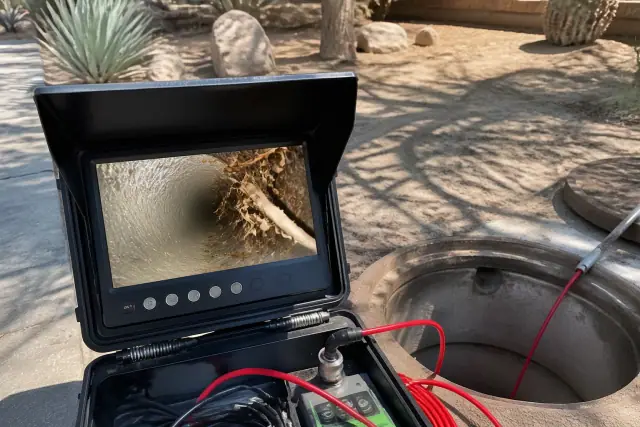
Portable sewer camera monitor displaying pipe walls and tree roots at a residential jobsite in Phoenix, AZ.

A standard single-family lateral inspection typically takes 30 to 60 minutes from setup through review. We locate the best access point, inspect the full reachable run, and explain each defect and its distance from that access point.

Request Estimate

Pre-Purchase Sewer Scope

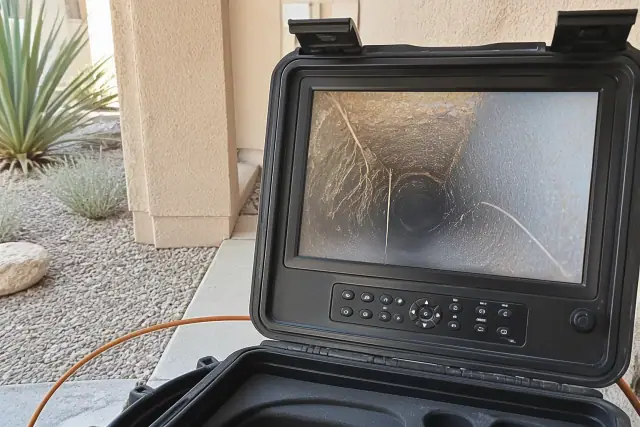
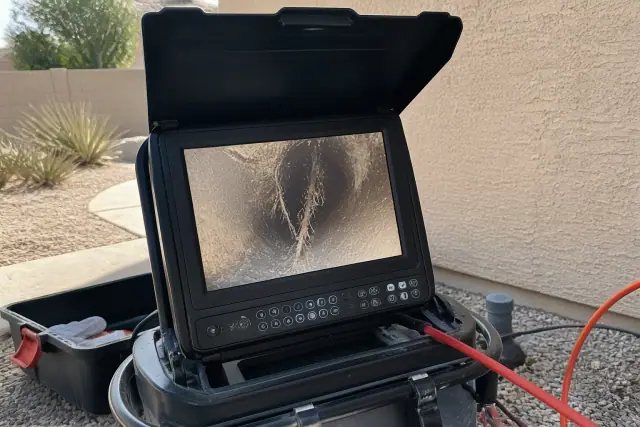
Sewer camera inspection monitor showing pipe conditions outside a building in Phoenix, AZ.

A sewer scope before closing can reveal original clay or Orangeburg laterals hidden from a normal home inspection. A roughly $300 inspection may prevent a $10,000 surprise, and the recorded video and written findings can support repair or price negotiations before closing.

Request Estimate

Commercial & Multi-Family Inspection

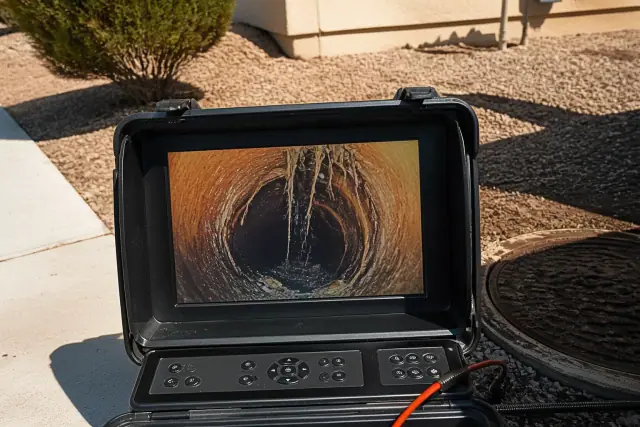
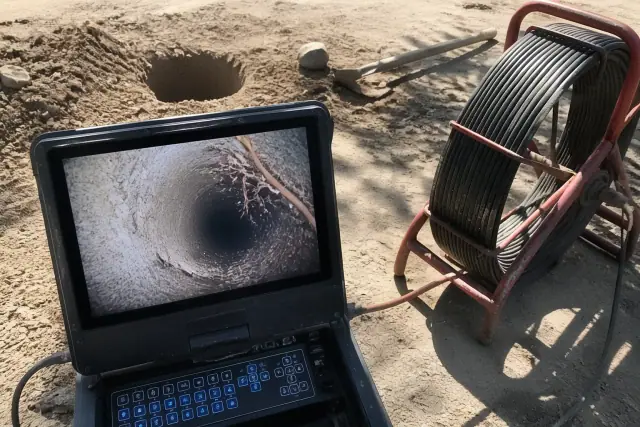
Sewer camera inspection monitor showing pipe damage and tree roots at a worksite in Phoenix, AZ.

Commercial and multi-family systems have larger pipe, longer runs, and multiple tenant connections feeding a shared main. Robotic crawler footage helps us map tie-ins and give property managers documentation suited to capital planning, insurance claims, or Maricopa County Environmental Services Department compliance records.

Request Estimate

Main Sewer Line Inspection

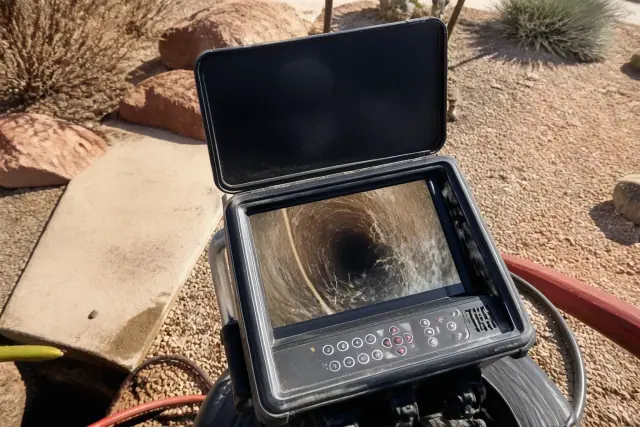
Sewer camera inspection monitor showing pipe roots in a xeriscaped front yard in Phoenix, AZ.

For a building main, we trace the line toward the municipal connection while checking every visible joint, branch, change in material, and low point. Mapping which building or unit connects to each section helps isolate problems that could affect several occupants at once.

Request Estimate

Same-Day Inspection for Active Backups

Technician performing a sewer camera inspection on a pipe with tree roots in Phoenix, AZ.

For an active sewer backup, we prioritize same-day inspection appointments so the repair plan is based on what the camera shows. The finding may point to hydro jetting, a localized repair, or trenchless lining rather than a guessed solution.

Request Estimate

Camera Inspection with Drain Cleaning

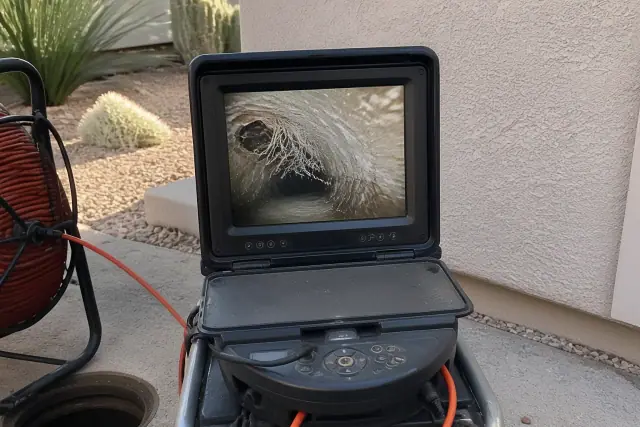
Sewer camera inspection monitor showing pipe damage near a stucco wall in Phoenix, AZ.

Heavy grease, scale, roots, or debris may block the view and need cleaning before a complete condition assessment is possible. Inspection packages can pair the scope with drain cleaning when both services are needed, allowing the cleared pipe to be checked for underlying damage.

Request Estimate
Inspection Technology

Sewer Camera Equipment & Methods

The right inspection method depends on pipe diameter, run length, access, buildup, and the documentation a property owner needs. Our equipment choices keep the footage steady, traceable, and useful for repair planning.

Sewer camera inspection monitor showing pipe damage at a job site in Phoenix, AZ.

High-Resolution Push Cameras

A push camera combines a waterproof head with a flexible fiberglass rod for common residential laterals. It provides live video while the operator controls travel and records footage-counter readings.

  • Suited to common residential sewer laterals
  • Waterproof camera head for live interior video
  • Flexible fiberglass rod follows the reachable run
  • Built-in sonde supports above-ground locating
  • Footage counter marks the distance to each defect
Request Estimate
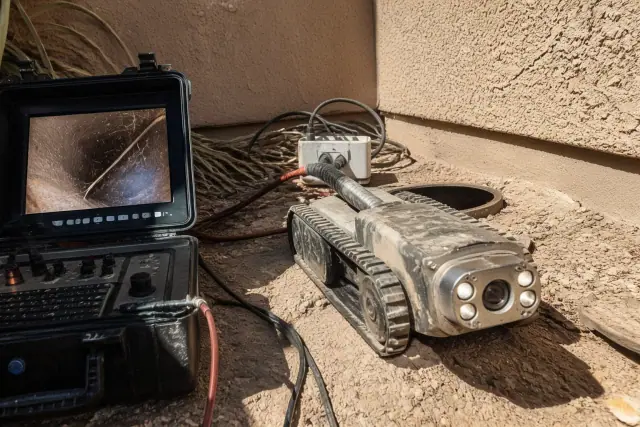
Robotic crawler camera for sewer inspection on a job site in Phoenix, AZ, with a monitor showing internal pipe footage.

Robotic Crawler Cameras

Self-propelled robotic crawler cameras handle larger-diameter commercial and municipal-connected lines. They deliver steady footage and operator-controlled views on distances exceeding 200 feet.

  • Designed for longer commercial sewer runs
  • Pan-and-tilt control examines pipe walls and joints
  • Stable video across larger pipe diameters
  • Clear views into lateral tie-ins
  • Useful for industrial and multi-unit systems
Request Estimate
Sewer camera inspection monitor showing pipe wall conditions and tree roots at a jobsite in Phoenix, AZ.

Sonde Location & Distance Logging

A receiver detects the sonde transmitter in the camera head from above ground. Combined with footage readings, that signal identifies where a defect sits and how deep it is before a repair plan is chosen.

  • Locates defects from the surface
  • Estimates the camera head's depth
  • Pairs each finding with a distance marker
  • Guides targeted excavation or pipe lining
  • Reduces uncertainty before repair work
Request Estimate
Sewer camera monitor showing pipe conditions and tree roots at a job site in Phoenix, AZ.

Recorded Condition Assessments

The camera run is recorded and reviewed with a written summary of the observed pipe condition. Consistent defect grading helps distinguish cosmetic wear from structural damage that calls for repair or replacement.

  • Continuous recorded inspection footage
  • Written summary of visible conditions
  • Distance markers for every point of interest
  • Defect severity explained in plain language
  • Documentation for repair and property decisions
Request Estimate
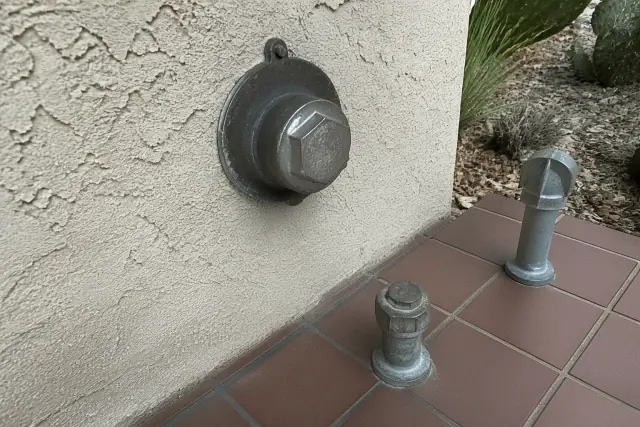
Metal sewer cleanout access pipe with a rugged cap on a stucco wall at a commercial site in Phoenix, AZ.

Cleanout, Vent & Fixture Access

An existing cleanout is usually the most direct entry, but a roof vent or toilet flange can provide access when no cleanout exists. We select the route that gives the camera the best chance to reach the full lateral safely.

  • Existing yard or building cleanout
  • Roof vent when the line is reachable
  • Toilet flange when no cleanout exists
  • Clear path to the city tap or property line
  • Cleaning first when buildup blocks visibility
Request Estimate
A Documented Diagnosis

Choosing the Right Inspection Approach

We choose a push camera or robotic crawler based on pipe diameter, run length, access, and property type, then add locating when an exact surface position is needed. The goal is footage that answers the actual question, whether you are tracking recurring clogs, evaluating a purchase, mapping a commercial system, or planning a repair.

Recorded, Distance-Logged Findings

You receive recorded footage, corresponding distance markers, and a written summary rather than a verbal guess. The findings are reviewed with you so repair crews know where to dig, line, clean, or investigate further.

Experience with Phoenix Sewer Conditions

Phoenix's 517.9-square-mile footprint is home to more than 1.6 million residents, making it the country's fifth-most populous city, and local pipe conditions vary across that reach. Caliche can swell when a monsoon drops an inch of rain in an hour, then dry and crack as summer surface temperatures regularly exceed 115 degrees; mature ficus, palo verde, and eucalyptus roots add pressure in Encanto, Arcadia, Maryvale, and other established areas.

Diagnosis and Repair Under One Roof

Phoenix Sewers can carry the findings into drain cleaning, hydro jetting, spot repair, trenchless repair, pipe lining, pipe bursting, or full replacement. Our technicians understand the Uniform Plumbing Code adopted by the City of Phoenix and permitting requirements enforced through the Phoenix Water Services Department.

What Sets Us Apart

Why Choose Phoenix Sewers for Camera Inspection?

We match the equipment to the line, show you the footage, explain any grading terminology, and connect every recommendation to a visible finding. When a targeted repair solves the problem, we explain that option instead of pressuring you toward the most expensive fix.

Request Inspection

Root Intrusion

Root intrusion is a frequent finding in older Phoenix residential lines, especially where clay joints have separated and created a moisture-seeking entry point. Camera footage pinpoints the affected distance so the choice between hydro jetting and sealing the joint with lining is based on the extent of intrusion.

Cracked or Collapsed Pipe

Homes built before 1980 may still have original clay or Orangeburg pipe that is cracking under soil movement or has reached the end of its service life. Video shows whether the damage is a hairline fracture, longitudinal crack, circumferential break, or full collapse and supports grading its severity.

Bellied Pipe and Standing Water

A low or bellied section lets wastewater collect instead of maintaining consistent slope. The camera makes standing water visible in real time and shows whether the low point is contributing to repeated buildup, slow flow, or backups.

Offset or Misaligned Joints

Expansive soil movement can shift pipe sections out of alignment, leaving a lip that catches waste or an opening that admits roots. Inspection footage shows the degree of offset and its exact location before trenchless repair, pipe bursting, or excavation is considered.

Grease and Scale Buildup

Grease and scale can narrow the usable pipe diameter and slow flow without a structural break. A camera identifies where buildup begins, whether cleaning can restore the opening, and whether hidden cracks or joint problems remain after the line is cleared.

Recurring Multi-Fixture Backups

Gurgling toilets, slow drainage across several fixtures, yard sewer odors, or unusually green grass over the lateral can point to a main-line issue. If a Phoenix property has backed up more than once in the past year, a camera inspection looks for the root cause rather than clearing the same symptom again.

How It Works

Our Sewer Camera Inspection Process

The inspection moves from access and equipment selection through recording, condition review, and a practical next-step discussion. Each stage keeps the findings tied to a visible location inside the line.

01.

Find the Best Access Point

We locate an existing cleanout or evaluate a roof vent or toilet flange when no cleanout is available. The access path is cleared so the camera can enter the lateral and travel as far as conditions allow.

02.

Select and Insert the Camera

A push camera is selected for common residential runs, while a robotic crawler fits longer or larger-diameter systems. We feed the camera steadily into the line while monitoring the live surface display.

03.

Record and Distance-Log the Run

Video records continuously as the camera advances toward the city main tap or property line. We note the footage counter at roots, cracks, joint offsets, material changes, standing water, buildup, and other points of interest.

04.

Evaluate Pipe Condition and Slope

The operator checks pipe material, joint alignment, structural defects, usable diameter, slope, and evidence of bellying. A sonde and receiver are used when a finding's exact above-ground position and depth need to be marked.

05.

Review the Footage and Findings

We review the video with you, point out each defect, and explain its distance and severity in practical terms. You receive the recorded footage and a written summary that connects observations to their markers.

06.

Match the Solution to the Defect

If the line needs work, we compare hydro jetting, a spot repair, trenchless lining, pipe bursting, or traditional replacement against what the camera documented. The recommendation is scaled to the actual condition instead of defaulting to a full replacement.

Schedule Your Inspection

Schedule a Sewer Camera
Inspection in Phoenix

Request an inspection for a recurring drain problem, active backup, property purchase, or commercial planning need. Phoenix Sewers serves properties across the greater metro area of roughly 5.19 million residents with recorded findings and repair options tied to the condition we see.

Inspection Help

Sewer Camera Inspection FAQs

Get clear answers about sewer camera timing, cost, access, findings, and preparation for Phoenix homes and commercial properties.

Call Our Inspectors

Common Phoenix findings include root intrusion, cracked or collapsed clay and Orangeburg pipe, bellied sections holding water, offset joints, and grease or scale restricting flow. Older lines tend to show more structural defects, while newer PVC can show debris blockages or minor grade issues.

Locate any known cleanouts and clear access to yard caps, crawlspaces, garage floor drains, or other possible entry points. Share the home's age and any prior sewer work if you know it; the inspection team handles flow checks, camera setup, and the live review.

A standard residential inspection generally takes 30 to 60 minutes, depending on line length, access points, locating needs, and buildup. Commercial or multi-unit inspections often take 1 to 3 hours because longer runs and multiple lateral connections must be mapped.

Significant structural defects such as circumferential cracks, collapse, severe bellying, or heavy root intrusion can make a line fail. In a real estate inspection, an unpermitted repair, undersized pipe, or improper connection to the city main may also require attention; the footage and defect grading clarify what needs repair.

No. The camera inspection is a non-invasive diagnostic process that does not require digging, cutting, or modifying the pipe, and the flexible head is designed to travel through the existing line. Access comes through an existing cleanout, vent, or fixture.

A pre-closing scope can reveal original clay or Orangeburg laterals that are not visible during a standard home inspection. Spending $250 to $600 for documented footage can be minor compared with a lateral replacement that reaches five figures, and the findings can support negotiations before closing.

A basic inspection typically costs $150 to $350 for one accessible cleanout and a line under 50 feet. Longer runs, several access points, or locator work can move the cost toward $600, while commercial lines and lines over 150 feet may cost more based on complexity; Phoenix Sewers quotes the work upfront based on access, length, and cleaning needs.

Industry guidance generally recommends inspection every 3 to 5 years for homes with mature trees, older clay pipe, or a history of backups. Commercial and multi-family properties may benefit from more frequent checks because more occupants use the shared system.

The preferred entry is usually an existing sewer cleanout. If no cleanout exists, a roof vent or toilet flange may provide access, depending on the pipe layout and whether the camera can reach the necessary section.

Push cameras fit most residential laterals, while a self-propelled crawler is better for longer commercial runs and larger-diameter lines. Its pan-and-tilt controls and steady travel provide clearer views of pipe walls and lateral tie-ins over long distances.

Not every line needs cleaning first. If grease, scale, roots, or debris blocks the camera's view or travel, drain cleaning or hydro jetting may be needed before the full pipe condition can be documented.

You receive recorded video and a written summary tied to footage markers for the visible findings. The technician reviews the defects, their severity, and how the results relate to cleaning, a localized repair, trenchless work, or replacement.

Phoenix Sewers inspects single-family homes, multi-family buildings, strip malls, industrial properties, and other commercial systems. Service covers Phoenix, Scottsdale, Tempe, Mesa, Glendale, Chandler, Gilbert, and the surrounding Maricopa County metro area.