Proudly serving Phoenix, Glendale, Scottsdale, Tempe, Mesa, Chandler & surrounding areasCall or Text 24/7: 480-259-3923
Aerial view of residential neighborhoods with desert landscaping and Saguaro cacti in Phoenix, AZ at golden hour.

Sewer Pipe Lining in Phoenix, AZ for Trenchless Lateral Restoration

Phoenix Sewers provides sewer pipe lining, sewer camera inspection, hydro jetting, and trenchless sewer repair in Phoenix, Arizona. We repair damaged residential laterals and commercial sewer lines using methods selected for the pipe's actual condition. Our services also include drain cleaning, main sewer line cleaning, sewer line replacement, pipe bursting, and commercial sewer support. Every lining recommendation begins with a recorded internal inspection so you can see the defect before work is proposed.

Expansive clay and caliche soils across the Salt River Valley shift through monsoon moisture and dry-season contraction, placing ongoing stress on buried sewer lines. Many Phoenix homes built during the growth booms of the 1960s through the 1980s still rely on clay or cast-iron pipe that can crack, corrode, or move at the joints. A cured-in-place pipe liner can often create a jointless new pipe without excavating a yard, driveway, pool deck, patio, or foundation. We diagnose the line first and explain whether lining, a spot repair, pipe bursting, or conventional replacement fits what the camera shows.

Our technicians install epoxy- and polyester-resin CIPP liners, use self-leveling color cameras, and follow ASTM F1216 requirements for resin cure, liner thickness, and structural performance. Phoenix Sewers holds Arizona Registrar of Contractors licensing.

Phoenix Sewers provides sewer pipe lining in Phoenix, Scottsdale, Tempe, Mesa, Glendale, and the greater Maricopa County metro area.

★ ★ ★ ★ ★4.9/5 Average Rating · 20+ Years of Experience · Thousands of Customers Helped · Licensed & Insured · Residential & Commercial

Trenchless Sewer Lining Options & Benefits

What Is Sewer Pipe Lining?

Sewer pipe lining is a trenchless rehabilitation method that forms a new pipe inside an existing damaged sewer. A resin-saturated felt or fiberglass tube enters through a cleanout or small access point, so a long open trench is often unnecessary.

The liner is pulled or inverted into position, inflated against the host pipe, and cured with ambient temperature, hot water, or UV light according to the resin system. Once cured, it becomes a jointless, corrosion-resistant structural pipe within the original line.

Lining can address cracks, pinhole corrosion, and root entry when enough host pipe remains to support installation. A camera inspection must first rule out severe bellies, collapsed sections, missing pipe wall, or other conditions that call for a different repair.

Benefits of Trenchless Sewer Lining

When the existing sewer is a sound lining candidate, trenchless rehabilitation can reduce demolition while restoring structural performance and reliable flow. The result depends on proper cleaning, resin selection, cure control, and final camera verification.

  • Uses an existing cleanout or a small access point instead of excavating the full line
  • Typically finishes in one to two days rather than a week or more for open trenching
  • Avoids much of the concrete, paver, irrigation, and landscaping restoration tied to excavation
  • Creates a jointless interior that blocks root entry through old pipe joints
  • Resists corrosion that can continue damaging older cast-iron laterals
  • Protects mature landscaping, pool decks, patios, block walls, driveways, and foundations
  • Properly installed CIPP can last 40 to 60 years under stable soil conditions, compared with a 30 to 50 year expectancy for new sewer pipe under similar conditions
  • Can rehabilitate suitable clay, cast-iron, PVC, and concrete host pipes
Complete Sewer Solutions

Phoenix Sewer Repair & Lining Services

From inspection and cleaning through lining or replacement, each service addresses a distinct part of restoring a reliable sewer line. Phoenix Sewers matches the method to the camera findings, pipe material, diameter, bends, depth, access, and structural condition rather than assuming every damaged pipe should be lined.

Cured-in-Place Sewer Pipe Lining

Completed cured-in-place pipe lining inside a sewer line at a jobsite in Phoenix, AZ.

CIPP installation places a resin-saturated liner against the cleaned host pipe and cures it into a tight structural tube. This no-dig approach is suited to many cracked, corroded, or root-intruded laterals that still retain enough structure for lining.

Request Estimate

Sewer Camera Inspection and Locating

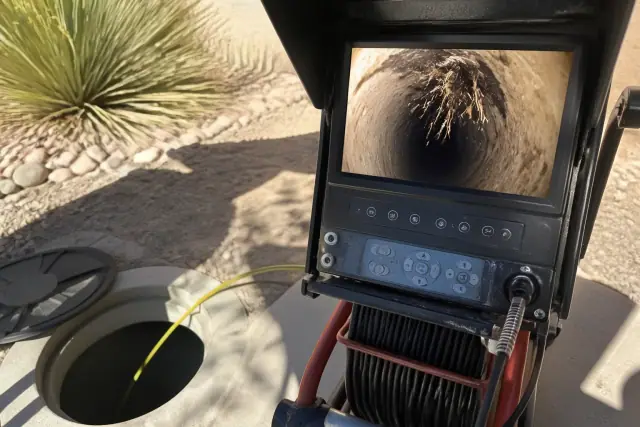
Sewer camera monitor displaying internal pipe conditions at a jobsite with desert xeriscaping in Phoenix, AZ.

A self-leveling color camera on a push rod or crawler reveals cracks, roots, offsets, corrosion, blockages, and bends inside the line. Sonde locating identifies a defect's surface position and depth, while recorded footage lets you review the evidence before choosing lining, spot repair, or replacement.

Request Estimate

Hydro Jetting and Main Sewer Line Cleaning

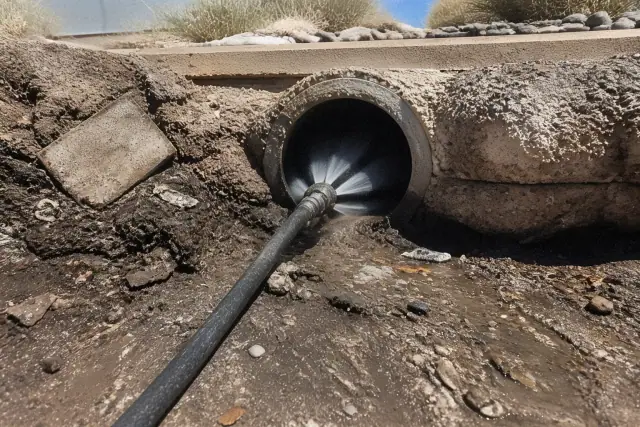
High-pressure hose nozzle cleaning a sewer pipe at a jobsite in Phoenix, AZ.

Hydro jetting uses water pressure up to 4,000 PSI through a specialized nozzle to remove grease, mineral scale, and root mass while restoring the pipe's flow diameter. It is the standard preparation before lining and can support preventive care on a multi-year interval for older clay laterals or homes with mature trees.

Request Estimate

Sewer Line Repair and Replacement

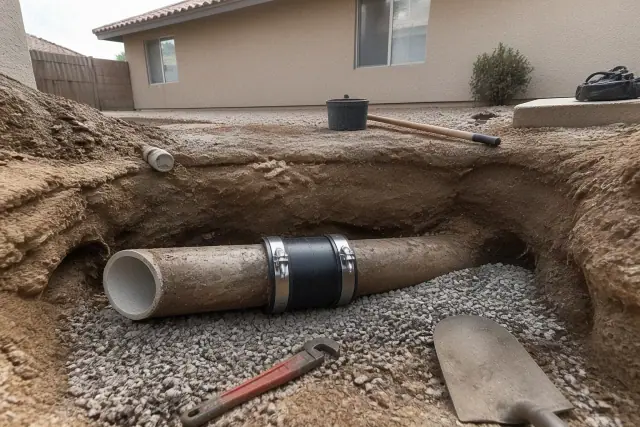
Repaired sewer pipe with a rubberized coupling and gravel bedding at a home in Phoenix, AZ.

Not every defect requires the same solution. Localized damage may call for spot excavation, lining can rehabilitate a structurally suitable run, and severely collapsed or undersized pipe may require full replacement; the inspection determines which path addresses the cause instead of only clearing the symptom.

Request Estimate

Trenchless Sewer Pipe Bursting

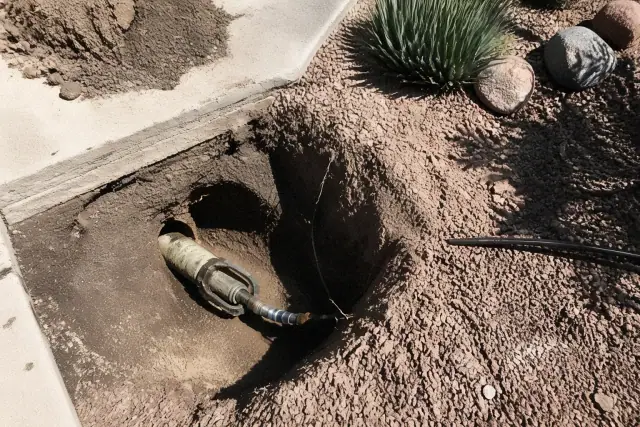
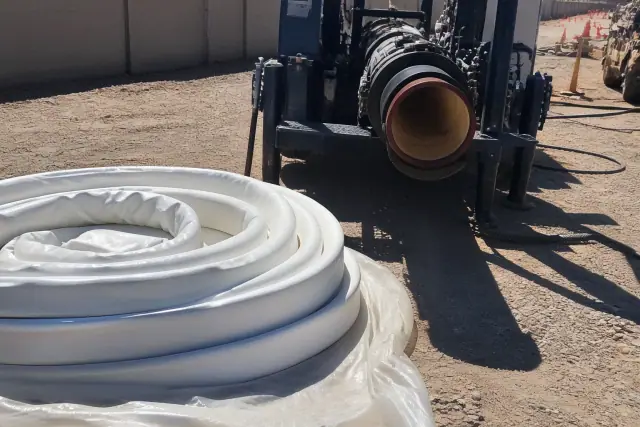
Hydraulic bursting head in an entry pit for trenchless sewer pipe lining in Phoenix, AZ.

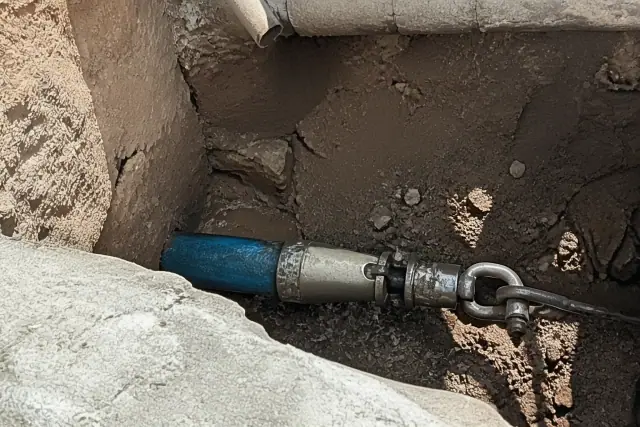
When lining cannot correct a severe belly, collapse, or undersized line, pipe bursting can replace the pipe with less disruption than a full open trench. A bursting head fractures the old pipe outward while pulling new HDPE pipe into position behind it, creating a complete replacement sized for the property's flow needs.

Request Estimate

Commercial and Emergency Sewer Services

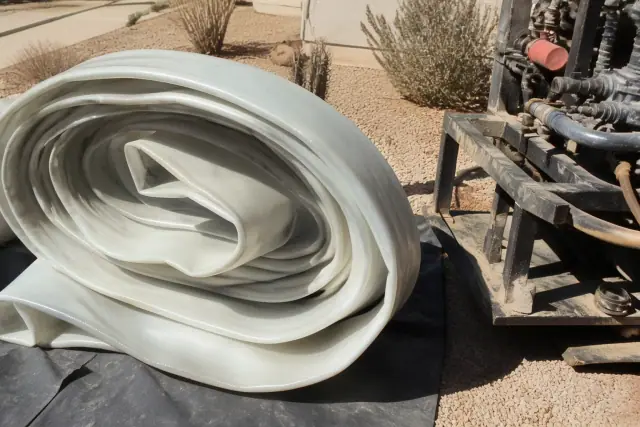
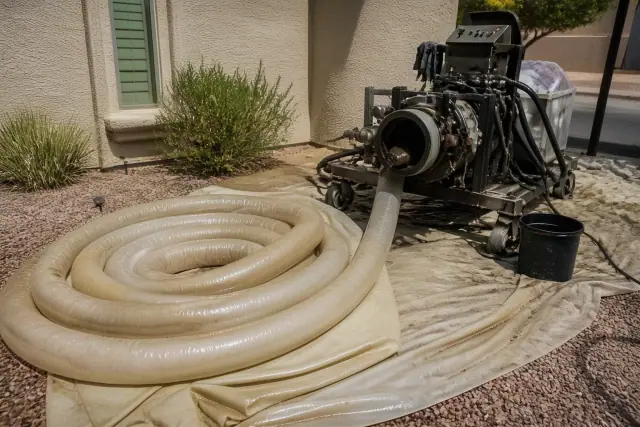
Resin-coated sewer liner coiled next to a hydraulic inversion machine at a jobsite in Phoenix, AZ.

Restaurants and multi-unit properties need larger-diameter materials and cleaning schedules matched to heavier grease and solids loads. For active backups and broken lines, Phoenix Sewers provides rapid-response support for residential and commercial emergencies, including 24/7 needs that threaten occupied space or business operations.

Request Estimate
Liner and Replacement Methods

Sewer Rehabilitation Materials & Methods

Resin chemistry, carrier material, cure method, and host-pipe condition all affect a trenchless repair. These options let the installation plan account for cast iron, clay, concrete, or PVC; residential laterals and commercial mainlines; access limitations; bends; and the time the line must remain out of service.

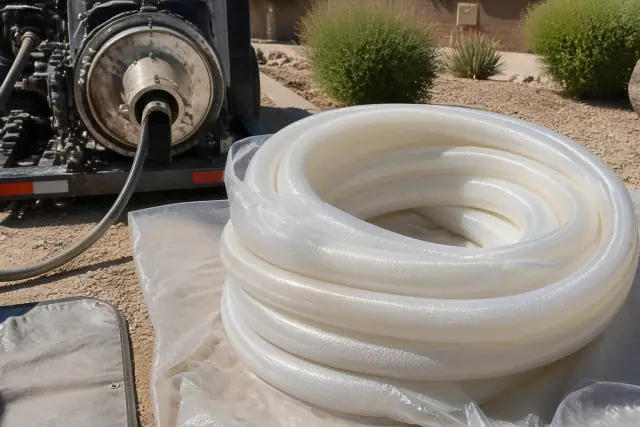
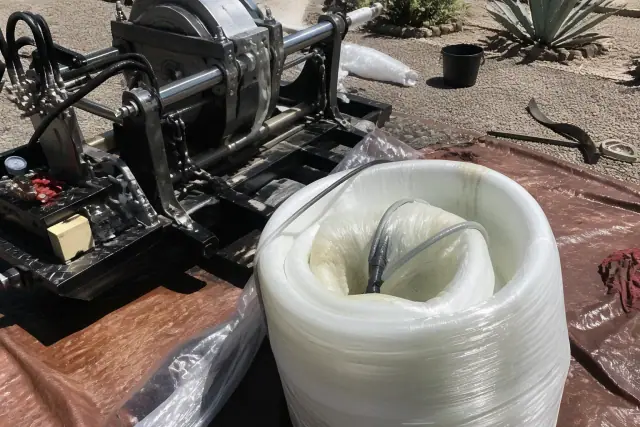
Epoxy resin CIPP liner coiled near a hydraulic inversion machine at a pipe lining jobsite in Phoenix, AZ.

Epoxy Resin CIPP Liners

Epoxy resin bonds to the interior of a properly prepared host pipe, sealing hairline cracks and pinhole corrosion. Once cured, it creates a smooth, corrosion-resistant lining suited to many older residential laterals in the Valley.

  • Bonds against cleaned cast-iron, clay, or concrete pipe walls
  • Seals hairline cracks and pinhole corrosion
  • Forms a jointless barrier against soil and root infiltration
  • Resists alkaline-soil and mineral-heavy-water conditions that contribute to corrosion
  • Can be installed through a cleanout or small access point
Request Estimate
Resin-coated CIPP sewer liner and hydraulic inversion machine in a residential backyard in Phoenix, AZ.

Polyester Resin CIPP Liners

Polyester resin is another trained CIPP option used with a saturated felt or fiberglass carrier. The final selection depends on the pipe, liner design, cure method, access, and structural requirements found during inspection.

  • Available for suitable cured-in-place pipe designs
  • Used with resin-saturated felt or fiberglass tube
  • Pulled or inverted through the prepared access point
  • Inflated against the host pipe for a close interior fit
  • Selected after diameter, bends, damage, and access are mapped
Request Estimate
Resin-coated liner being prepared for sewer pipe lining next to hydraulic equipment at a jobsite in Phoenix, AZ.

UV-Cured Pipe Lining

UV-cured lining uses a light-activated resin system for a fast, controlled cure and consistent wall thickness. Once the liner is positioned, cure can occur in a matter of hours, helping return a household or business line to service the same day when job conditions allow.

  • Light-activated resin supports precise cure control
  • Faster cure can reduce line downtime
  • Uniform curing supports consistent liner wall thickness
  • Useful where household or business service restoration is time-sensitive
  • Final camera footage verifies a tight, wrinkle-free result
Request Estimate
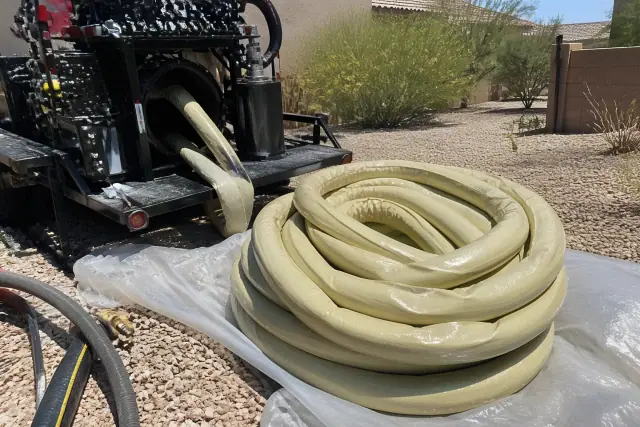
Resin-coated flexible pipe liner coiled next to a hydraulic inversion machine at a job site in Phoenix, AZ.

Ambient and Hot-Water Curing

Ambient-temperature and hot-water curing provide alternatives to UV activation for compatible resin systems. Cure timing and technique are chosen for the resin, liner dimensions, site access, and the conditions inside the host pipe.

  • Ambient cure uses the resin system's temperature-based setting process
  • Hot water can accelerate cure for compatible liners
  • Air bladder or water column holds the liner against the host pipe
  • Cure choice accounts for resin type and job conditions
  • Post-cure inspection confirms the liner from cleanout to connection
Request Estimate
Hydraulic bursting head in a trenchless pipe replacement pit at a jobsite in Phoenix, AZ.

HDPE Pipe Bursting Replacement

Pipe bursting is the trenchless replacement option for lines that cannot support a liner. It breaks the old pipe outward while pulling a new HDPE line through the existing path, limiting landscape disruption compared with conventional trenching.

  • Replaces collapsed or severely damaged pipe
  • Can correct an undersized line with properly selected new diameter
  • Pulls new HDPE pipe behind the bursting head
  • Reduces full-length trenching across the property
  • Provides complete replacement where rehabilitation is unsuitable
Request Estimate
Finding the Right Repair

Choosing the Right Sewer Repair Approach

The right method starts with evidence: the camera shows whether the host pipe is structurally suitable, and locating identifies where access would be needed. Phoenix Sewers then weighs pipe material, diameter, depth, bends, damaged length, flow demand, and surface restoration before recommending lining, spot excavation, pipe bursting, or open replacement.

Camera Diagnosis Before Quoting

Every underground lining project begins with a camera inspection. You can review the recorded crack, root intrusion, offset, corrosion, or blockage before Phoenix Sewers recommends a repair or cuts an access point, and the measured footage supports a condition-based quote instead of a guess.

Licensed, Standards-Based Installation

Phoenix Sewers holds Arizona Registrar of Contractors licensing, and its technicians are trained on epoxy- and polyester-resin CIPP installation. Work follows ASTM F1216 criteria governing resin cure, liner thickness, and structural performance.

Trenchless Options for Phoenix Properties

The repair plan accounts for Phoenix clay and caliche soils as well as hardscape and mature landscaping above the line. Lining and pipe bursting can limit disruption around patios, driveways, pool decks, irrigation, and block walls while addressing the buried defect.

What Sets Us Apart

Why Choose Us for Sewer Pipe Lining in Phoenix?

A free sewer inspection establishes the actual footage, access, and condition before pricing. That diagnostic-first approach helps prevent wrong pipe sizing, liners placed over unresolved blockages, and lining recommendations for pipes that need bursting or excavation instead.

Get a Free Sewer Inspection

Tree Root Intrusion

Roots from mature ash and mesquite trees seek moisture through leaking joints, especially during dry Phoenix summers. Hydro jetting removes the immediate root mass, and a suitable jointless liner seals the entry point so roots cannot re-enter through that old joint.

Cracked Clay Pipe

Clay laterals common in homes built before 1980 can crack as expansive soil moves around them. Camera footage shows whether the crack is contained and the host pipe can accept CIPP or whether separation and missing pipe wall require another repair.

Corroded Cast Iron

Older cast-iron laterals can corrode from the inside out, leaving rough scale, pinholes, and weakened walls. Cleaning and inspection establish whether an epoxy liner can seal the damage or the remaining pipe is too deteriorated for rehabilitation.

Bellied Sewer Lines

A belly is a sagging low spot where solids collect even after the line is cleaned. Because a liner follows the existing pipe path, a severe belly may require spot excavation or pipe bursting rather than lining.

Offset Pipe Joints

Soil movement can shift pipe sections out of alignment, creating an edge that catches waste and opens a path for roots or soil. Inspection measures the offset and determines whether preparation and lining can bridge it safely or structural correction is needed first.

Grease, Scale, and Recurring Clogs

Restaurant lines and older residential kitchens can develop grease and mineral scale that narrow the flow path, while root growth can cause repeated backups. Hydro jetting cleans the full wall more thoroughly than an auger that only punches through a blockage, preparing the line for inspection or lining.

How It Works

Our Sewer Pipe Lining Process

A durable CIPP result depends on completing each stage in order: inspect, clean, design, install, cure, and verify. The process documents existing conditions before work and confirms the finished liner before the sewer returns to normal use.

01.

Inspect and Locate the Damage

A full camera pass identifies defects, maps bends, measures diameter, and records the condition of the host pipe. Sonde locating marks the exact surface position and depth of a defect if access or excavation could be required.

02.

Hydro Jet and Prepare the Pipe

Hydro jetting strips grease, scale, debris, and root mass from the interior wall. Thorough cleaning is essential because the resin-saturated liner needs a clear, properly prepared surface to seat and cure correctly.

03.

Design and Saturate the Liner

The measured length, diameter, bends, host-pipe material, and structural needs guide liner thickness and resin selection. The felt or fiberglass tube is saturated with the selected epoxy or polyester resin before insertion.

04.

Insert and Inflate the Liner

The saturated tube is pulled or inverted through the access point and positioned across the damaged run. An air bladder or water column presses it evenly against the host pipe's interior walls.

05.

Cure the New Pipe in Place

The resin cures by ambient temperature, hot water, or UV light, depending on the selected system. Controlled curing turns the flexible tube into a jointless structural pipe and maintains the designed wall thickness.

06.

Verify the Finished Liner

A final camera pass checks that the liner formed a tight, wrinkle-free seal from the cleanout to the connection point. Phoenix Sewers reviews the completed interior before considering the lining project finished.

See the Pipe Before You Decide

Schedule a Sewer Pipe
Lining Inspection

Request a free sewer inspection to see the condition, footage, and access requirements of your line before receiving a quote. Phoenix Sewers will explain whether CIPP lining, cleaning, spot repair, pipe bursting, or replacement fits the recorded findings.

Sewer Lining Help

Phoenix Sewer Pipe Lining FAQs

These answers cover lining eligibility, timing, cost, longevity, cleaning, inspection, cure methods, and alternatives for damaged Phoenix sewer lines. A camera inspection is still necessary to determine what your specific pipe can support.

Call Phoenix Sewers

Yes. CIPP can line suitable clay, cast-iron, PVC, and concrete pipe when enough host structure remains to support the liner during cure. A camera inspection first checks for collapse, a severe belly, or missing pipe wall that would make lining unsuitable.

A typical residential lining project takes one to two days from inspection through final verification, depending on length, bends, and cure method. UV systems can cure in a matter of hours once positioned, while commercial or longer mainline projects with multiple access points can take two to three days.

Phoenix sewer lining typically runs $80 to $250 per linear foot, with most residential projects from the home to the city connection totaling $3,500 to $8,500. Commercial and larger-diameter mainline work can range from $6,000 to $20,000 or more. Length, diameter, depth, access points, bends, host material, and condition affect the final quote; sewer mains across many Phoenix lots are buried three to six feet deep, which is one reason excavation and restoration can cost more.

Properly installed CIPP liners have a service life of 40 to 60 years under stable soil conditions. Longevity depends on installation quality, resin selection, cure, liner design, and soil stability, so Phoenix Sewers follows ASTM F1216 requirements for thickness, cure, and structural performance.

Lining is often faster and less disruptive for cracks, root intrusion, or corrosion when the pipe remains structurally suitable. A collapsed section, severe belly, missing wall, or undersized pipe may require spot excavation, pipe bursting, or full replacement instead. Camera findings determine the appropriate method.

Common causes include mature-tree roots entering joints, cast-iron corrosion, and clay pipe cracking as expansive clay and caliche soils move through monsoon and dry-season moisture changes. These issues are common in established areas such as Arcadia, Ahwatukee, Encanto, and Willo, but only a camera inspection can identify the cause in a specific line.

Yes. Phoenix Sewers responds to active backups and broken-line emergencies for residential and commercial properties across the metro area. The immediate priority is restoring flow, followed by a camera inspection to determine whether lining, spot repair, pipe bursting, or replacement is needed.

CIPP means cured-in-place pipe. A resin-saturated felt or fiberglass tube is installed inside the damaged host pipe, inflated against its walls, and cured into a jointless structural liner without excavating the full run.

Epoxy and polyester describe resin options used in CIPP liner systems, while UV refers to a light-activated curing method. Phoenix Sewers selects the resin, carrier, and cure approach according to pipe material, dimensions, bends, access, structural needs, and service-restoration timing.

The camera measures diameter, maps bends, locates defects, and shows whether the host pipe has enough integrity for CIPP. It prevents a liner from being installed over unresolved debris or in a collapsed, severely bellied, or otherwise unsuitable pipe. Recorded footage also gives you evidence for the recommended repair.

Grease, mineral scale, debris, and root mass can keep a liner from seating correctly against the host pipe. Hydro jetting removes that buildup across the pipe wall and restores the flow path so the cleaned line can be reinspected and prepared for lining.

A liner follows the existing pipe path, so it does not correct a severe belly, and a collapsed section may not provide the support needed during cure. Depending on the camera findings, Phoenix Sewers may recommend spot excavation, pipe bursting, or replacement instead.

Phoenix Sewers provides sewer pipe lining and full-service sewer repair throughout Phoenix, Scottsdale, Tempe, Mesa, Glendale, and the greater Maricopa County metro area. Residential laterals, restaurant lines, and multi-unit property mainlines are evaluated according to their actual condition and load.