Heat and Pipe Damage
The exothermic reaction can deform PVC fittings, weaken solvent-welded joints and rubber gaskets, and speed corrosion in metal pipe.
Phoenix Sewers sees failed chemical drain treatments on service calls across the Valley every week. The heat and corrosive chemistry can weaken pipe materials while leaving the original blockage in place, so a quick bottle can become a harder and costlier sewer problem.
The exothermic reaction can deform PVC fittings, weaken solvent-welded joints and rubber gaskets, and speed corrosion in metal pipe.
Chemical cleaners may affect fresh hair or soap film, but they perform poorly against grease, mineral deposits, and mesquite or palm root intrusion deeper in a sewer line.
A camera shows the pipe material, condition, and obstruction so a plumber can choose cabling, hydro jetting, repair, or replacement based on evidence.
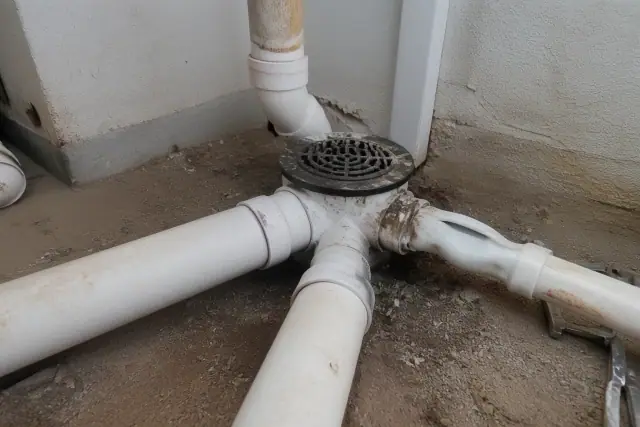
A blistered or slightly deformed PVC fitting can reveal where cleaner pooled near a clog. Even subtle distortion may weaken a joint before a leak becomes visible.

Roots, grease, and mineral scale create dense obstructions that chemical products rarely remove. The blockage can stop the liquid and concentrate it against the pipe wall.
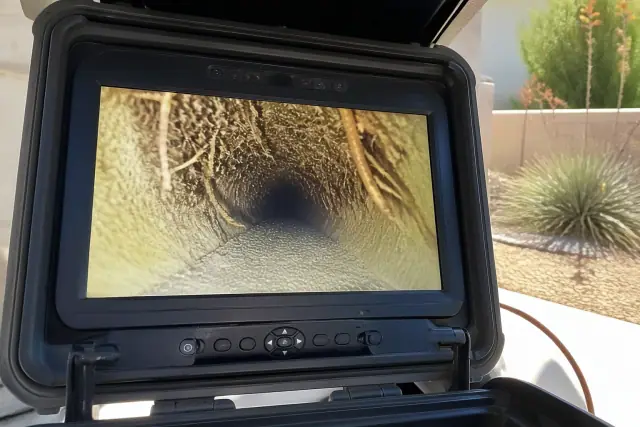
A sewer camera identifies the obstruction and pipe condition before a power snake or hydro jet is selected. That diagnosis helps match the clearing method to the actual cause.
Note which fixture is affected, whether other drains gurgle or back up, and whether the problem keeps returning. If cleaner was already used, record the product type and timing for the plumber.
Pipe material, age, existing damage, clog type, blockage location, and frequency of chemical use all matter. Central Phoenix homes built before the 1970s may still have clay or cast iron laterals with less tolerance for repeated exposure.
Slow drains that keep returning, gurgling fixtures, or repeated backups point to a deeper cause. A camera inspection can identify root intrusion, scale, grease, or damaged pipe before more cleaner is added.
Never mix drain cleaner brands or combine cleaner with bleach because hazardous gas can form. Avoid leaning over the drain while the product works, ventilate the room, and do not add another chemical when the first one fails.
| Situation | What It Suggests | Safer Action |
|---|---|---|
| Fresh hair or soap near one drain | A fixture-level clog may be close to the opening. | Try a plunger or hand auger without adding chemicals. |
| Recurring slow drains, gurgling, or backups | The obstruction may be deeper in the branch or main line. | Use a camera inspection, then mechanical snaking or hydro jetting as conditions require. |
| Roots, grease, or mineral scale | Chemicals are unlikely to remove the underlying blockage. | Choose mechanical clearing that reaches the full pipe diameter. |
| Cleaner has already been poured | Product may be standing in the blocked line and producing fumes. | Do not mix products; ventilate the area and tell the technician what was used. |
Sodium hydroxide, sulfuric acid, and lye react with water and organic material to produce heat. When cleaner pools in a blocked line for hours, that heat and corrosive action stay concentrated in one place; unmoved sludge and chemical residue can then set into a cement-like layer that makes mechanical clearing harder. A bottle may cost $10 to $20, while professional drain cleaning in Phoenix typically runs $100 to $600 and a main line cleared with a power snake runs $200 to $600. If repeated use damages the pipe, replacement can cost $2,000 or higher, and a camera diagnosis can reveal whether the real choice is closer to a $300 cleaning or a $10,000 excavation.
The recommendation changes with pipe material and condition, the kind and location of the clog, and how often chemicals have been used. One occasional bottle carries less cumulative risk than habitual treatment, but neither reaches the grease, hard-water mineral deposits, or mesquite and palm roots that commonly obstruct Valley sewer lines. A fixture-level hair or soap clog may respond to a hand auger, while a main-line blockage needs camera diagnostics and mechanical clearing; hydro jetting can scour the full pipe diameter instead of merely pushing through the obstruction.
Are liquid cleaners safe for pipes? Not reliably, because concentrated heat can soften PVC joints and accelerate corrosion in cast iron or galvanized steel. Do they work? Sometimes on fresh hair or soap film near the opening, but not on deeper grease, mineral scale, or roots. Enzymatic or bacterial treatments are generally lower risk for PVC maintenance, while an active blockage is better handled with a plunger, hand auger, cabling, or hydro jetting; if a plunger or hand auger does not clear it within a few attempts, stop and arrange an inspection. If fumes cause ongoing coughing, throat irritation, or breathing difficulty, move to fresh air and seek medical attention, and never combine cleaner with bleach.
If a Phoenix drain keeps slowing, gurgling, or backing up, Phoenix Sewers can inspect the line with a camera and show you the cause before recommending cleaning, trenchless repair, or replacement. Tell the team if chemical cleaner has already been used so the visit can be handled safely.