Typical Repair Range
A standard Phoenix sewer line repair usually falls between $1,818 and $6,429, averaging around $4,123. Localized work costs less than replacing a long, deep, or inaccessible run.
Phoenix Sewers explains why a Phoenix sewer line repair can range from $1,818 to $6,429, with an average near $4,123, while a full replacement can exceed $20,000. Pipe length, depth, access, material, caliche excavation, and the extent of damage determine where a property falls within those ranges.
A standard Phoenix sewer line repair usually falls between $1,818 and $6,429, averaging around $4,123. Localized work costs less than replacing a long, deep, or inaccessible run.
Pipe depth, damaged length, clay or cast iron material, caliche excavation, access beneath hardscape, permits, and distance from the house to the city main can all raise the price.
A camera inspection costs $200 to $500 and identifies the pipe material, exact damage, and depth before excavation. Those findings show whether cleaning, spot repair, lining, bursting, or replacement fits the condition.
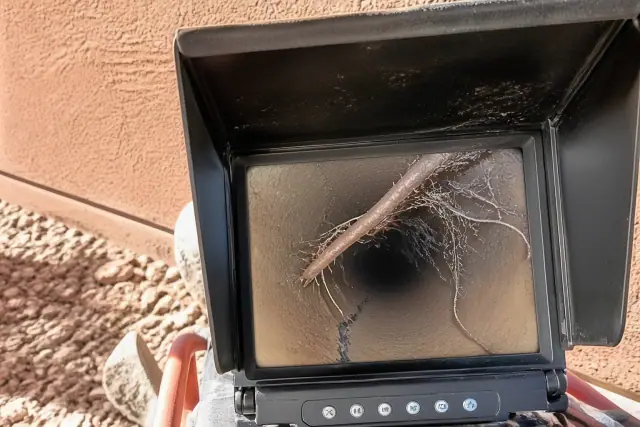
A sewer camera view inside clay or cast iron pipe can reveal a crack, offset joint, or root intrusion. The damaged length matters more to the repair scope than a generic estimate.
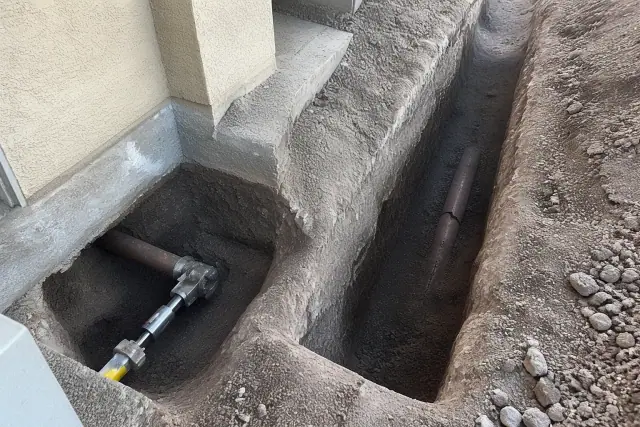
Small trenchless access points disturb less surface area than an open trench crossing a driveway, mature landscaping, or a pool deck. Restoration cost can change which method offers the better overall value.
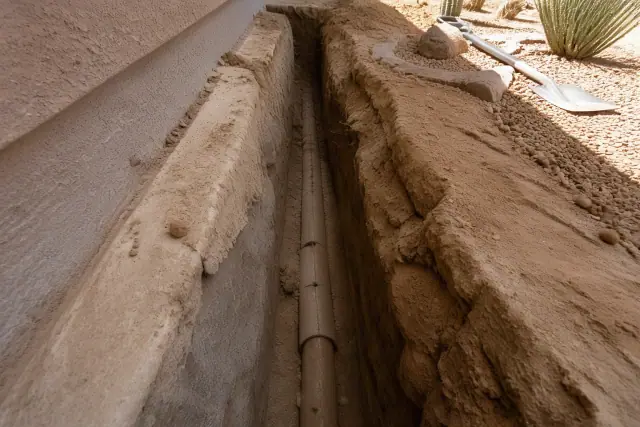
A sewer lateral may run at different depths through dense caliche between a house and the city main. Deeper excavation and a longer run require more labor and equipment.
Repair is usually less expensive for one cracked joint, a localized root intrusion, or a small offset. When damage covers 25% or more of the line or appears at multiple points, replacement can offer better long-term value.
A leaking joint or small crack caught early typically costs $600 to $3,000 to repair. If erosion, foundation settling, or a sinkhole has developed, the range can climb to $5,000 to $10,000.
Under normal conditions, cast iron generally lasts 70 to 100 years, clay 50 to 60 years, and PVC 50 to 100 years. Monsoon soil movement and aggressive roots can shorten those lifespans.
Drain cleaning costs $150 to $500 for isolated clogs, while hydro jetting runs $350 to $900 for grease, scale, or roots. Cracks, offsets, and failed pipe sections require structural repair rather than cleaning alone.
| Service or Scope | Typical Cost | Context |
|---|---|---|
| Camera inspection | $200 to $500 | Confirms material, damage, and depth. |
| Drain cleaning / hydro jetting | $150 to $500 / $350 to $900 | For clogs, grease, scale, or roots rather than broken pipe. |
| Minor spot / leaking joint repair | $600 to $1,500 / $600 to $3,000 | Applies to accessible, localized damage caught early. |
| Trenchless spot repair | $1,000 to $5,000 | Scope depends on the damaged section. |
| Standard sewer line repair | $1,818 to $6,429 | Phoenix average is near $4,123. |
| Typical full replacement | $3,500 to $8,500 | Large, deep, or difficult runs can exceed $20,000. |
| Trenchless lining or bursting | $80 to $250 per linear foot | Most residential jobs total $6,000 to $12,000; extensive work can reach $20,000. |
| House-to-street replacement | $8,000 to $20,000+ | Distance, pavement cuts, and public right-of-way affect cost. |
| Under-slab replacement | $15,000 to $25,000 | Slab cutting, deep excavation, and interior restoration raise the total. |
An exterior 30 to 40-foot main can cost $11,500 to $16,500 with traditional open-trench replacement. At 50 feet, trenchless work is roughly $4,000 to $12,500, while open trench commonly reaches $8,000 to $15,000 after excavation, haul-off, and backfill. A house-to-street run can reach $8,000 to $20,000+ when it crosses public right-of-way, and under-slab work regularly reaches $15,000 to $25,000 because of slab cutting, deep excavation, and interior restoration. Re-landscaping, permit fees, and hardscape removal can also push a replacement to $12,000 to $25,000.
Clay and cast iron laterals from the 1940s through 1960s remain in Encanto-Palmcroft, Willo Historic District, and pockets of Arcadia, while newer West Valley and Ahwatukee construction typically uses PVC. Dense caliche, monsoon soil movement, and roots from mesquite and ficus trees can complicate excavation or damage. Driveways, sidewalks, pool decks, line depth, and distance to the city main add access and restoration costs; work crossing public right-of-way may require a City of Phoenix Street Transportation Department permit, while some replacement totals include permit fees through Phoenix Water Services. Commercial pricing also varies by line diameter, length, access, and business-hour scheduling, with restaurants, multifamily properties, and retail centers often needing more frequent hydro jetting and camera inspection because of grease and higher-volume use.
Repair is usually less expensive than replacement when damage is confined to one cracked joint, root intrusion, or offset; once damage affects 25% or more of the line or appears at multiple points, replacement can provide better long-term value. Homes over 30 years old should have an annual camera inspection, and multiple slow drains, gurgling, or sewage odors are reasons to inspect sooner. Standard homeowners policies typically exclude gradual wear and root intrusion but may cover sudden, accidental damage, so check the policy and any sewer backup rider. Pipe lining suits lines with multiple small cracks, while pipe bursting can replace the pipe and increase its diameter without a full open trench.
An accurate estimate should follow a camera inspection that confirms pipe material, damage location, depth, and access. Share the property details and symptoms so the recommended scope can distinguish cleaning, spot repair, lining, bursting, or full replacement.