Proudly serving Phoenix, Glendale, Scottsdale, Tempe, Mesa, Chandler & surrounding areasCall or Text 24/7: 480-259-3923
Guides

Common Sewer Pipe Defects Identified During Camera Inspections

Phoenix Sewers uses a waterproof, self-leveling camera to show whether a Phoenix sewer lateral contains root intrusion, grease buildup, cracked or corroded pipe, offset joints, a belly, or a collapse. These findings matter because the right response can range from cleaning to trenchless repair or replacement, and the footage distinguishes a clog from structural damage before excavation is considered.

Quick Summary

  • The most common Phoenix findings are root intrusion, grease and debris buildup, cracked or corroded pipe, bellies, offset joints, and collapsed sections.
  • A standard residential inspection typically costs $100 to $600 and takes 30 to 90 minutes, depending on line length and access.
  • Homes built before the 1970s in Encanto-Palmcroft, Willo, and Coronado often still have clay or cast-iron laterals that are vulnerable to cracking and corrosion.
  • Home buyers should inspect the sewer lateral before closing, especially on properties built more than 40 years ago; pipe lining or pipe bursting may avoid excavating a driveway or landscaping when damage is found.

What Sewer Cameras Usually Find

Root Intrusion

Roots enter through hairline cracks or loose joints, then branch through the line and trap paper, wipes, and solids. Mature landscaping in Arcadia, Encanto, and canal-fed neighborhoods makes this the most frequent local camera finding.

Cracks and Corrosion

Clay and cast-iron laterals in homes built before 1980 commonly show fractures, flaking, tuberculation, or rough walls. Cast iron has a service life of roughly 50 to 75 years, so deterioration can both narrow flow and weaken the pipe.

Bellies and Offset Joints

A belly appears as a low section where water and waste pool, while an offset joint shows two pipe sections no longer aligned. Soil settlement, root pressure, and poor backfill can cause both, and cleaning alone rarely corrects either condition.

What the Inspection Footage Should Show

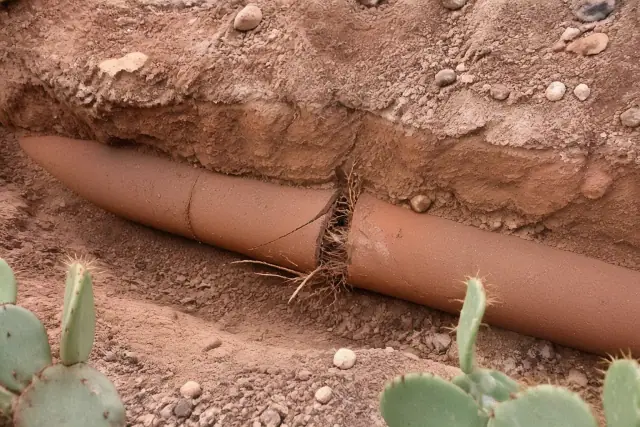
Roots Entering a Cracked Sewer Joint

Tree roots growing through a cracked terra cotta sewer pipe in a trench in Phoenix, AZ.

Fine roots can enter at a joint and spread into a mass that catches paper and solids. That branching pattern distinguishes root intrusion from loose debris alone.

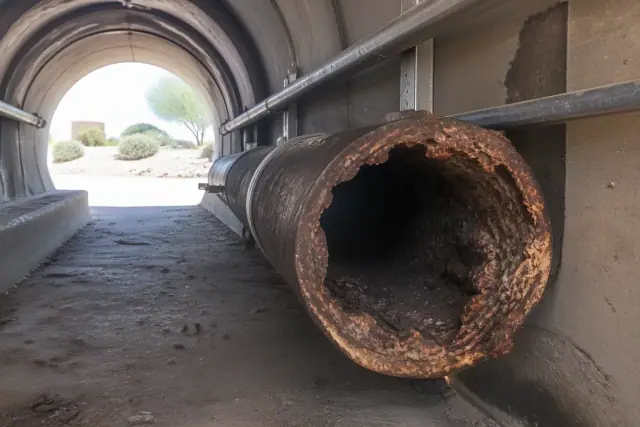
Corrosion Inside an Older Cast-Iron Lateral

Corroded cast-iron lateral pipe with structural pitting inside a concrete maintenance tunnel in Phoenix, AZ.

Flaking, tuberculation, and a narrowed interior point to cast-iron corrosion. Rough pipe walls explain why grease and toilet paper keep snagging in the same area.

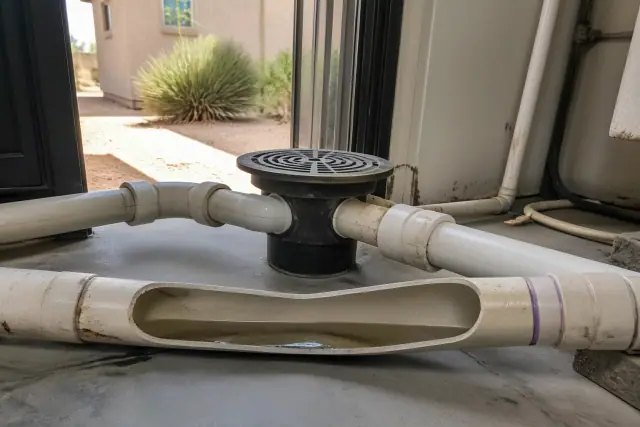
Standing Water in a Bellied Pipe Section

Standing water inside a sagging PVC drainage pipe in an industrial utility room in Phoenix, AZ.

A visible dip with standing water and settled solids indicates a belly in the pipe. This helps separate a grade problem from a clog that cleaning can remove.

Inspection Snapshot

Camera Reach and Access

A flexible push-rod camera is usually rated for 100 to 200 feet of travel and can enter through a cleanout, a pulled toilet, or a roof vent stack.

Typical Residential Cost

Most residential jobs land between $250 and $500 within the broader $100 to $600 range. No cleanout, extensive locating, or line lengths beyond 100 feet can increase the cost.

Typical Inspection Time

A residential inspection usually takes 30 to 90 minutes. A single-family lateral running 50 to 100 feet to the city main is generally on the faster end, while multiple commercial connections take longer.

Structural Warning Signs

A collapsed section, significant offset, belly holding water, active root breach, or corrosion that compromises the pipe requires a repair evaluation rather than routine cleaning alone.

Finding-to-Response Chart

Camera FindingWhat It ShowsLikely Action
Roots or heavy buildupA branching mass, grease coating, or trapped debris is restricting flow.Clear the line and inspect the root entry point or pipe wall.
Cracks or corrosionFractures, flaking, or rough walls indicate structural deterioration.Compare spot repair with trenchless pipe lining.
Belly or offset jointStanding water, a visible dip, or misaligned pipe sections interrupt grade.Evaluate spot repair, pipe bursting, or replacement by severity.
Collapsed sectionThe camera encounters a deformed, broken, or blocked pipe run.Define the damaged length and replacement scope.

What the Camera Reveals

An LED-lit camera transmits real-time video while the operator watches pipe material, joint condition, slope, and obstructions. Recorded footage and distance markers turn recurring backups, slow drains, or odors into a written and visual damage assessment; in older clay or Orangeburg lines, even twenty minutes of footage can reveal more than symptoms alone.

What Changes the Repair Path

Grease, sediment, hair, and foreign objects may call for hydro jetting because high-pressure water scours the pipe wall instead of only opening a path through the clog. Cracks, extensive roots, offsets, bellies, and collapses shift the decision toward spot repair, pipe lining, pipe bursting, or replacement based on severity and depth. Phoenix's expansive clay and caliche layers, mature tree roots, and monsoon moisture can keep applying pressure after a symptom is cleared.

Common Follow-Up Questions

To prepare, locate the main cleanout, clear access around it, and share the property's age and prior sewer work; if there is no cleanout, access may require pulling a toilet or using a roof vent. A home with mature trees near the lateral or pipe over 25 years old may warrant inspection every 2 to 3 years, while newer PVC with little root exposure can often go longer. Buyers should inspect before closing, especially when a property is more than 40 years old, and grease-heavy commercial lines generally need more frequent checks. Roots do not always mean full replacement: a sound pipe with one small entry point may be cleared and repaired locally, while damage across several sections may require pipe bursting or replacement.
Ask a Local Pro

Need Help Reading Your Inspection?

Share the property's age, access points, and any recurring backups, slow drains, or yard odors. A sewer camera inspection can document pipe material, condition, and distance to each problem before you choose cleaning, repair, or replacement.