Proudly serving Phoenix, Glendale, Scottsdale, Tempe, Mesa, Chandler & surrounding areasCall or Text 24/7: 480-259-3923
Guides

Warning Signs You Need a Sewer Line Replacement for Your Phoenix Property

Phoenix Sewers runs sewer camera inspections for homes and businesses across Maricopa County every week, using the pipe condition on screen to distinguish a fixable clog or isolated crack from a line with collapse, multiple breaks, or age-related failure. If drains back up more than once, sewage odors appear, or the yard turns soggy over the line, finding the structural cause matters before indoor sewage, soil erosion, or higher repair costs follow.

Quick Summary

  • One slow drain is usually a local clog; slow drains across multiple bathrooms, gurgling toilets, and several fixtures backing up together point to the main line.
  • A sewer camera inspection can confirm root intrusion, a bellied section, offset joints, corrosion, or full collapse.
  • An isolated crack or minor offset may be repaired, while multiple breaks, collapse, or pipe beyond its service life usually calls for replacement.
  • Cast iron and clay lines more than 50 years old deserve close inspection; delaying confirmed failure risks sewage backup and soil erosion under the foundation.

When Replacement Is Likely

Structural Damage on Camera

A line usually needs replacement when camera footage shows a full collapse, multiple failure points, a severe offset, or corrosion through the pipe wall. Isolated cracks and small root entry points may still be candidates for lining or spot repair.

Pipe Age and Material

PVC can last over 100 years with normal use, cast iron typically runs 50 to 75 years, and clay or Orangeburg often fails well before the 50-year mark. Material and current condition matter more than age alone.

Recurring Backups

If cleaning or hydro jetting clears a blockage but it returns within weeks or every few months, the pipe may have a belly, offset joint, crack, or root intrusion. Repeated backups call for a sewer scope before more cleaning.

What a Sewer Camera Should Reveal

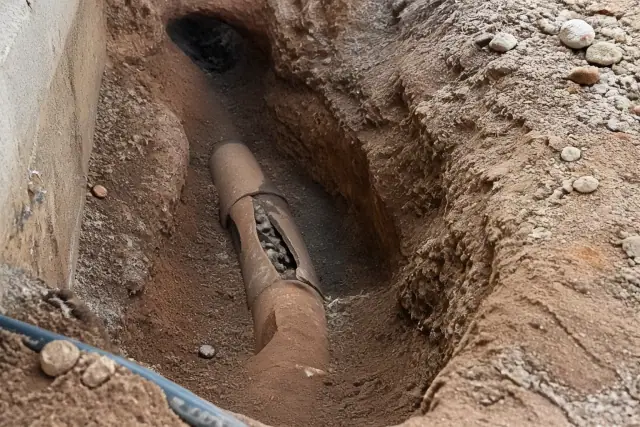
Cracked Clay Pipe with Root Intrusion

Cracked clay pipe with root intrusion in a trench next to a stucco wall in Phoenix, AZ.

Roots can enter through an existing crack or loose joint in brittle clay, then expand and widen the damage. Camera footage makes the entry point and pipe condition visible.

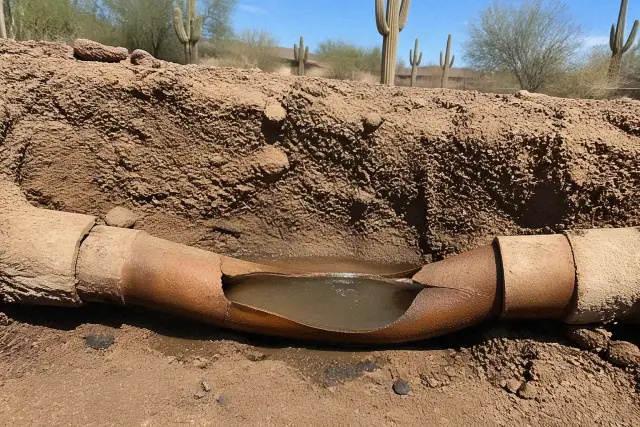
Bellied Sewer Pipe Holding Wastewater

Bellied sewer pipe with stagnant wastewater in an excavation trench at a jobsite in Phoenix, AZ.

A belly is a low, sagging section where water and solids collect instead of flowing. The pooled material explains why cleaning cannot permanently correct the underlying slope.

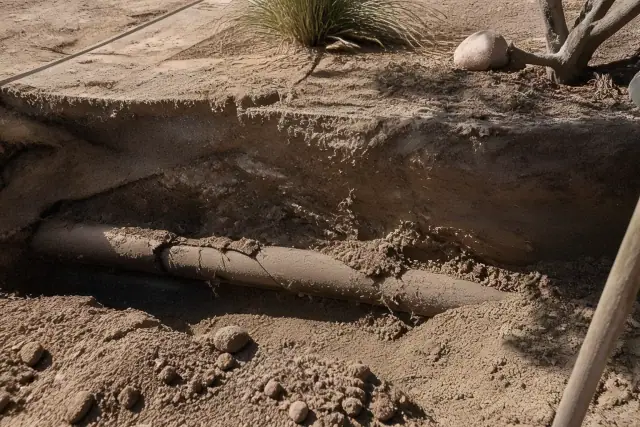
Collapsed Main Line Blocking All Flow

Deep trench showing a cracked terra cotta sewer pipe in desert soil at a jobsite in Phoenix, AZ.

A full collapse stops flow and can push sewage toward the lowest fixtures. Confirming the blockage on camera helps determine whether pipe bursting or open excavation is possible.

Replacement Decision Snapshot

Best First Check

Scope the full run to record depth, material, cracks, roots, offsets, bellies, and collapse. Before replacement, those findings identify exact problem locations and guide the access plan.

Material and Age Clues

Phoenix homes built through the 1960s and 70s often have cast iron that corrodes from the inside out, while clay installed before 1980 is prone to joint cracks. Once scale and rust severely narrow cast iron, jetting may briefly restore flow, but that degree of corrosion usually points to replacement within a few years of the first symptoms.

When to Act

Standing sewage, total loss of flow, or a camera-confirmed collapse warrants same-week attention. A persistent indoor sewer-gas odor should not be ignored because the gas can contain hydrogen sulfide; two or three symptoms across different fixtures point more strongly to main-line failure.

What Cleaning Cannot Fix

Drain cleaning and hydro jetting remove buildup, but they do not realign offset joints, lift a belly, rebuild a corroded wall, or restore a collapsed pipe. A structurally damaged line will keep recreating the blockage.

Repair-or-Replace Planning Matrix

Camera FindingLikely Response
Isolated crack or small root intrusionSewer pipe lining or spot repair
Two or more offset jointsTrenchless sewer replacement
Bellied section under 3 feetPipe bursting or excavation
Full collapse or multiple failure pointsFull sewer line replacement
Clay or cast iron over 50 years oldProactive replacement may be recommended

What the Findings Mean

Repair is reasonable when the camera finds one isolated crack, a small root intrusion, or a minor offset that can be lined or spot-repaired. Replacement becomes the more reliable choice when damage appears at multiple points, the pipe is collapsed, a belly repeatedly holds waste, or clay or cast iron has reached the end of its useful condition. The decision should follow camera findings, not symptoms alone.

Factors That Change the Answer

Expansive clay and caliche soil can allow a sewer line to settle into a belly, while monsoon moisture can intensify odor over a leak. In Arcadia and Ahwatukee, mature landscaping over decades-old pipe can make a greener, spongy patch an early warning; citrus and eucalyptus near older Phoenix lines are recurring root-intrusion risks. Clay lines near downtown and Coronado may date from before 1980, so access, exact depth, material, and whether the line can be lined, burst, or must be excavated all affect the recommendation.

Common Follow-Up Questions

Can a 50-year-old sewer line stay in service? Yes, if a camera shows sound walls and aligned joints; age alone does not prove failure. Can hydro jetting solve recurring backups? It can restore flow temporarily, but it cannot repair a belly, offset, crack, or collapse. When should you schedule a scope? After two or more backups in a year, before buying a home with original plumbing, or before major landscaping. Do trenchless methods avoid all digging? They typically cost less and disturb less landscaping than an open trench, but access and camera findings determine whether pipe bursting or excavation fits.
Ask a Local Pro

Need Help Applying This Guide?

If your property has multiple slow fixtures, sewer odor, soggy ground, or recurring backups, request a sewer camera inspection before approving another cleaning or a full replacement. A scope should document depth, material, and exact problem locations so the proposed work matches the pipe condition.